
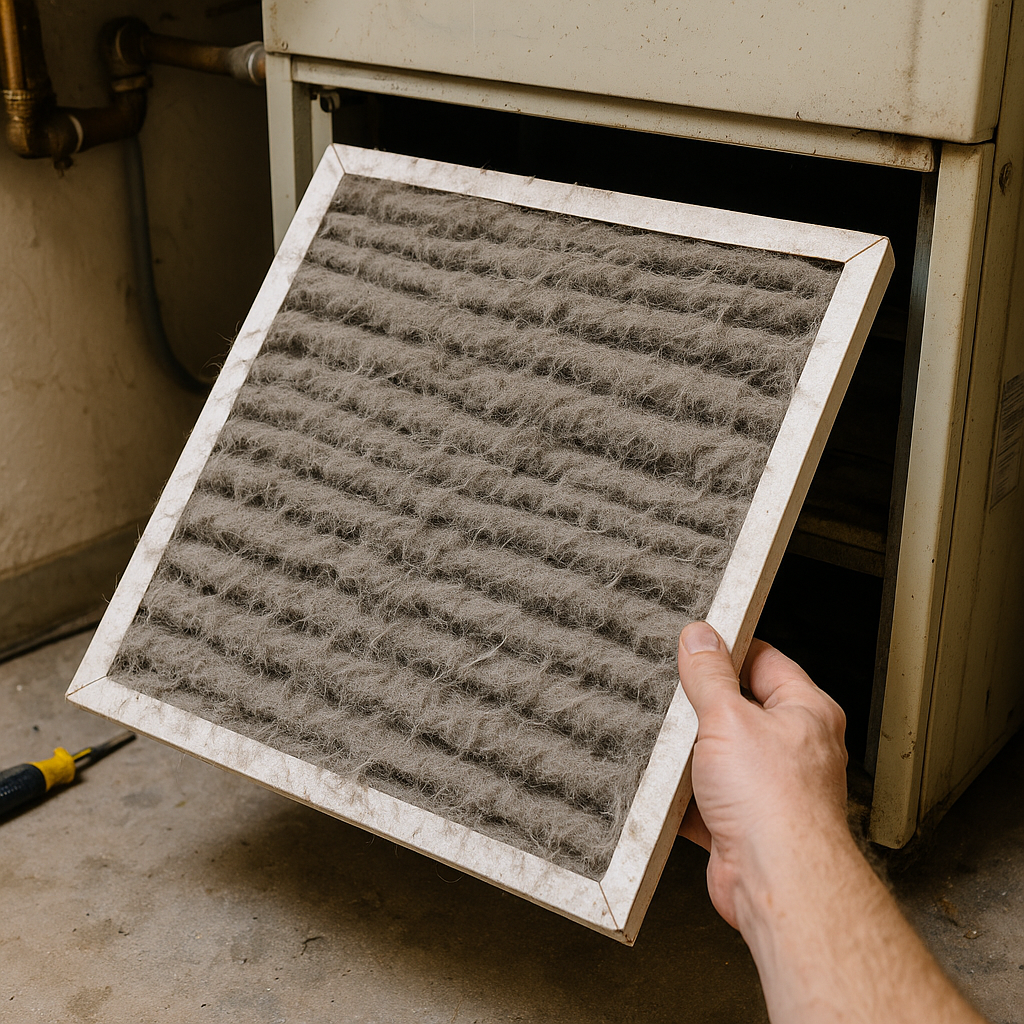
Quick Answer: Ice on an AC coil or refrigerant line almost always comes from one of two things: not enough warm air moving across the coil (usually a dirty filter or blocked vents) or a refrigerant problem such as a leak. Turn the cooling off, set the fan to ON to thaw the ice, and replace the filter before you run it again. Running an iced-up system can damage the compressor.
You walk past the indoor unit and notice the big copper line is wearing a sleeve of frost, or you pull the panel and the coil looks like the back of a freezer that badly needs defrosting. Meanwhile, the air at the vents has gone weak and lukewarm, and the house is not cooling. It feels backward for an air conditioner to freeze, but ice is one of the most common ways a cooling system tells you something upstream has gone wrong. Once you understand why the coil gets cold in the first place, the fix usually points to itself.
Why the Coil Gets Cold and Then Freezes
The indoor coil, called the evaporator, is where the cold actually happens. Liquid refrigerant enters it and boils into a gas, and that change pulls heat out of the air blowing across the coil. That is how a warm room gives up its heat: the coil takes it. On a normal cycle, the coil runs cool but stays above freezing, because the steady stream of warm indoor air landing on it keeps the surface warm enough that any condensation drips off as water, not ice.
Freezing starts when that balance tips. The coil sits below 32 degrees, the moisture on it turns to frost instead of dripping away, and from there it snowballs. Frost narrows the gaps through which the air moves, so even less warm air reaches the coil, which gets colder still, so more ice forms. Give it a few hours, and a thin frost becomes a solid block. Two situations can cause the coil to drop below freezing: too little warm air crossing it, or a refrigerant fault that lowers the coil's temperature on its own. Almost everything below is a version of one of those two.
Restricted Airflow, the Most Common Cause
Think of the warm air flowing across the coil, the way a space heater keeps a window from frosting over on a cold night. Cut off that warm stream, and the surface drops below freezing fast. Anything that chokes airflow through the indoor unit can freeze the coil, and these are the usual culprits, roughly in the order worth checking.
- A dirty air filter- This is the number one cause and the easiest to fix. A filter caked with dust and pet hair starves the coil of the warm air it needs. Pull yours and hold it to the light. If you cannot see light through it, that is very likely your answer.
- Closed or blocked supply and return vents- Furniture over a return grille, a rug across a floor vent, or supply registers shut in unused rooms all cut the volume of air moving through the system. The coil needs that air to stay warm.
- A dirty blower wheel- The fan that pushes air across the coil is a curved wheel with many small blades. When grime builds up on them, the wheel moves far less air than it should, even with a clean filter in place.
- A failing blower motor- A motor that is weakening, or dropping to a lower speed than it should, moves less air across the coil and lets it freeze.
- An undersized or collapsed return duct- If the return path is too small for the system, or a flex duct has kinked or crushed, the unit cannot pull in enough air, no matter how clean the filter is.
The tell for airflow problems is that the air at your vents feels weak, and the freezing tends to come back within a day or two after you thaw the coil if the underlying restriction is still there.
When the Coil Itself Is the Problem
The coil can also freeze because it is filthy. Over the years, a fine film of dust and mold forms on the aluminum fins, especially in a humid climate where the coil stays damp for much of the cooling season. That film acts like a blanket. The refrigerant inside still runs cold, but the insulating layer keeps that cold from transferring into the passing air, so the surface temperature of the coil drops below freezing and frost forms on the fins. A dirty coil often shows up alongside a musty smell and is one reason an annual coil cleaning earns its place, particularly here, where hard-water minerals and cedar-season dust give the fins plenty to collect.
When Refrigerant Is the Problem
The other major path to a frozen coil is a refrigerant fault, and this one is not a fix for the homeowner. Your system holds a specific, sealed charge of refrigerant. When a leak develops and the charge drops, the pressure inside the coil falls, and lower pressure means a lower boiling point, which drives the coil temperature well below freezing. The result looks a lot like an airflow problem, but the cause is entirely different.
Two points matter here. First, low refrigerant almost always means a leak, not a system that simply "needs topping off." Refrigerant is not a fuel that burns away. If the charge is low, it went somewhere, and the leak needs to be found and repaired, not just refilled, or you are back to a frozen coil in a matter of weeks. Second, refrigerant work is a sealed-system repair that requires EPA certification by law and specialized gauges to do correctly. Adding refrigerant is not something to attempt yourself. A useful tell: if only the large copper line, the suction line, is frosting while the coil fins are relatively clear, that pattern often points toward the refrigerant side rather than airflow, though a technician's gauges are what settle it.
The Less Obvious Triggers
A few other conditions can push a coil to freeze:
- Running the AC on an unusually cool night- When the outdoor temperature drops below the range the system was designed for, the pressures inside shift, and the coil can freeze even with clean airflow. This is worth remembering during a cool spell or in the milder shoulder months, not just at the height of summer, and it is one reason a thermostat set very low with long overnight run times can ice up when the outdoor air is already cool.
- A stuck or failed blower- If the fan does not come on at all while the cooling runs, no warm air crosses the coil, and it will freeze quickly.
- A plugged condensate drain, in the aftermath- A frozen coil eventually thaws, and all that ice becomes water. If the condensate drain is already sluggish or clogged, that surge can overflow the drain pan and spill around the unit, so a freeze and a water leak sometimes arrive together.
What to Do the Moment You See Ice
Take these steps in order:
- Turn the cooling off, but set the fan to ON- Switch the thermostat from Cool to Off, then set the fan from Auto to On. Room-temperature air moving across the coil melts the ice far faster than letting it sit, and it does it without running the compressor.
- Give it time to thaw fully- A light frost may clear in an hour or two; a solid block can take several hours. Do not rush it, and do not chip or scrape at the ice. The coil fins and tubing are thin and can be easily bent or punctured.
- Replace the air filter and open the vents- With the system off, swap in a clean filter and make sure supply and return grilles are open and unobstructed. Watch for melt water overwhelming the drain pan as the ice clears.
- Then run it and watch- Once everything is dry, switch back to cooling. If the coil frosts up again within a day or two, the root cause remains, and it is time to bring in a technician.
The one thing not to do is keep running the AC while it is iced up. When the coil is blocked with ice, the liquid refrigerant that should have boiled into a gas can travel back to the compressor as a liquid, and compressors are built to pump gas, not liquid. That condition, called liquid slugging, can wreck the most expensive part of the whole system. A frozen coil is a cheap problem if you catch it and an expensive one if you ignore it.
In a climate where the AC runs long and hard for much of the year and the air carries real humidity, coils here face more freeze-up opportunities than in milder places, simply because the system spends so many hours running and pulling moisture out of the air. That is all the more reason to keep the filter fresh and the airflow clear.
Frequently Asked Questions
Set the thermostat to Off and the fan to On, then wait. The fan pushes room-temperature air over the coil, melting the ice without running the compressor. A thin frost clears in an hour or two, but a solid block of ice can take four to eight hours to fully thaw, so plan to leave it off for the evening rather than expecting a quick turnaround. Never chip, scrape, or pour hot water on the ice to speed it up, because the aluminum fins and copper tubing can be punctured or bent with very little force, and a torn coil turns a cheap fix into a real repair.
That puddle is there because the ice is melting faster than the system can drain it. During normal cooling, moisture pulled off the air drips into a condensate pan and out through a drain line at a manageable trickle. When a frozen coil thaws, a whole block of ice turns to water at once and can overrun the pan or overwhelm a drain line that is already sludged or clogged, so it spills onto the floor or down into the air handler. Some systems have a secondary pan with a float switch that shuts the unit off when it detects overflow, which is why you sometimes find the AC dead and the pan full rather than a puddle. Mopping up is only half the job: the freeze that caused it still needs to be diagnosed, and a clogged condensate drain often needs clearing at the same time.
It can, and it catches people off guard. The system is sized to move a set volume of air across the coil, so closing off too many supply registers or blocking a return grille with a couch or a rug chokes that airflow, just as a dirty filter does. Homeowners often shut vents in spare rooms to save energy, but past a point, it doesn't lower the load; it just starves the coil of the warm air that keeps it above freezing, and it can raise duct pressure enough to worsen leaks. If several rooms are closed off or a return is covered, reopening them is a free first move before assuming something is broken. The same goes for a crushed or disconnected flex duct up in the attic, which quietly does the same thing out of sight.
Because a sealed refrigerant system does not consume refrigerant the way an engine burns fuel. The charge is fixed and stays put unless it leaks, so a low reading indicates a leak somewhere in the coil, line set, or connections. Simply adding refrigerant leaves the leak in place, causing the system to lose charge and freeze up again, often within weeks. The correct repair is to locate and seal the leak, then recharge to the manufacturer's spec. It is also EPA-regulated work that requires certification and gauges, which is why it is a technician's job and not a DIY top-off.
Airflow and cleanliness prevent most repeat freezes. Check the filter monthly and change it every one to three months, sooner during heavy cedar-pollen and dust stretches when it loads up faster. Keep supply registers and return grilles open and clear of furniture and rugs, even in rooms you do not use, so the system gets the air volume it was sized for. Schedule an annual professional coil and blower cleaning, and have the refrigerant charge checked during that visit, since a small leak caught early is far cheaper than a compressor damaged by repeated freezing.
Yes, a clean filter rules out only the most common cause. The coil can still freeze from a dirty blower wheel or a weakening blower motor that moves too little air, a coil so grimy that the fins insulate themselves, undersized or crushed return ducts, or a refrigerant leak that drops the coil temperature on its own. It can also frost up when the AC runs on an unusually cool night, below the outdoor temperature the system was designed for. If a fresh filter and open vents do not stop the freezing, the cause is deeper and worth a professional diagnosis.
Book a coil and airflow diagnosis before the freeze-up repeats — get to the real cause and keep your home cooling through the hottest stretch. Above & Beyond Air Conditioning & Heating serves San Antonio and the surrounding Hill Country. TACLA00095687E. Call (210) 897-8658.
