
Refrigerant Leak Repair in San Antonio, Find It, Fix It, Then Recharge
Electronic detector, dye, and ultrasonic methods, R-454B, R-410A, and R-22 ready. We find and fix the leak, never just top off and leave.

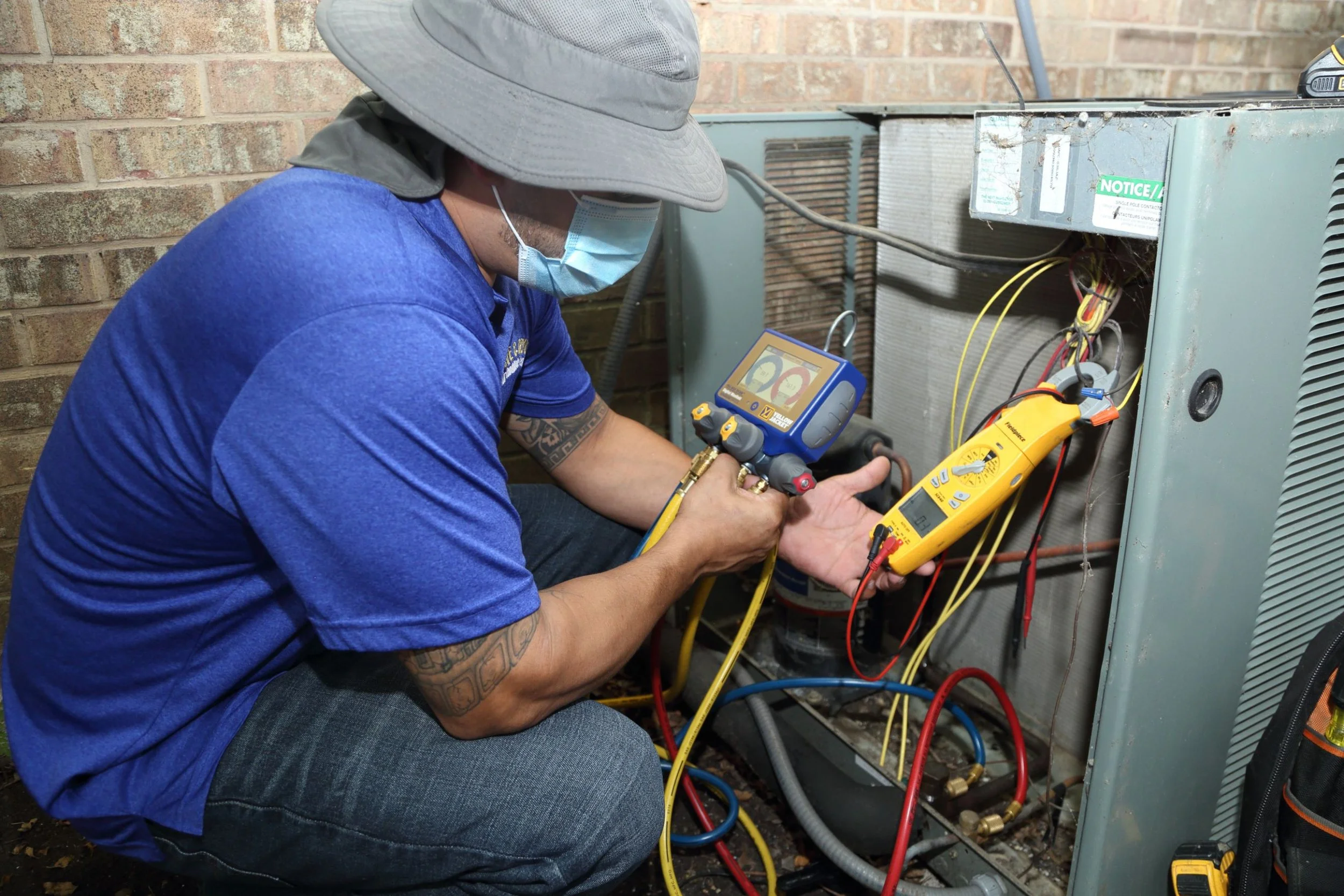


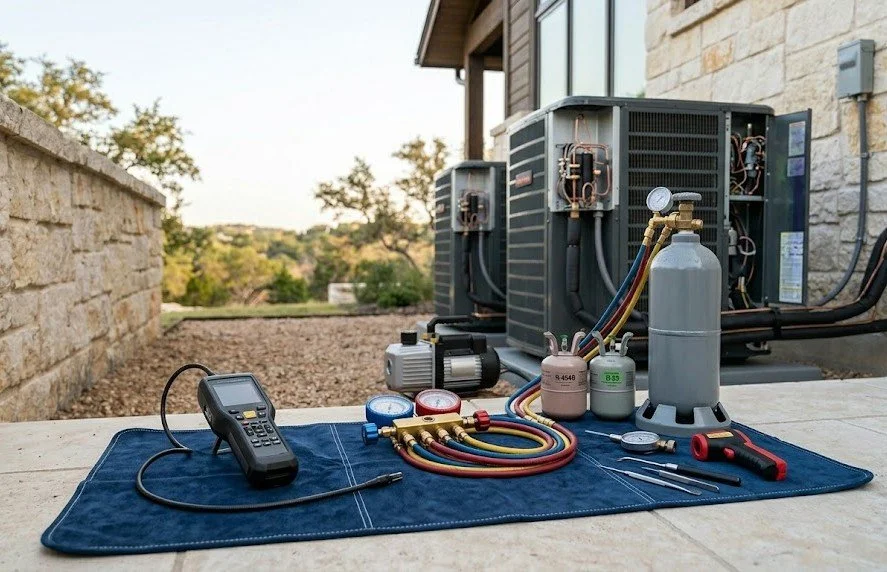
A leaking AC is not a low on refrigerant problem. It is a hole that gets bigger every season you put it off. We locate the leak first, repair it, then recharge by weight. No top-offs that leave you paying for refrigerant again next summer.
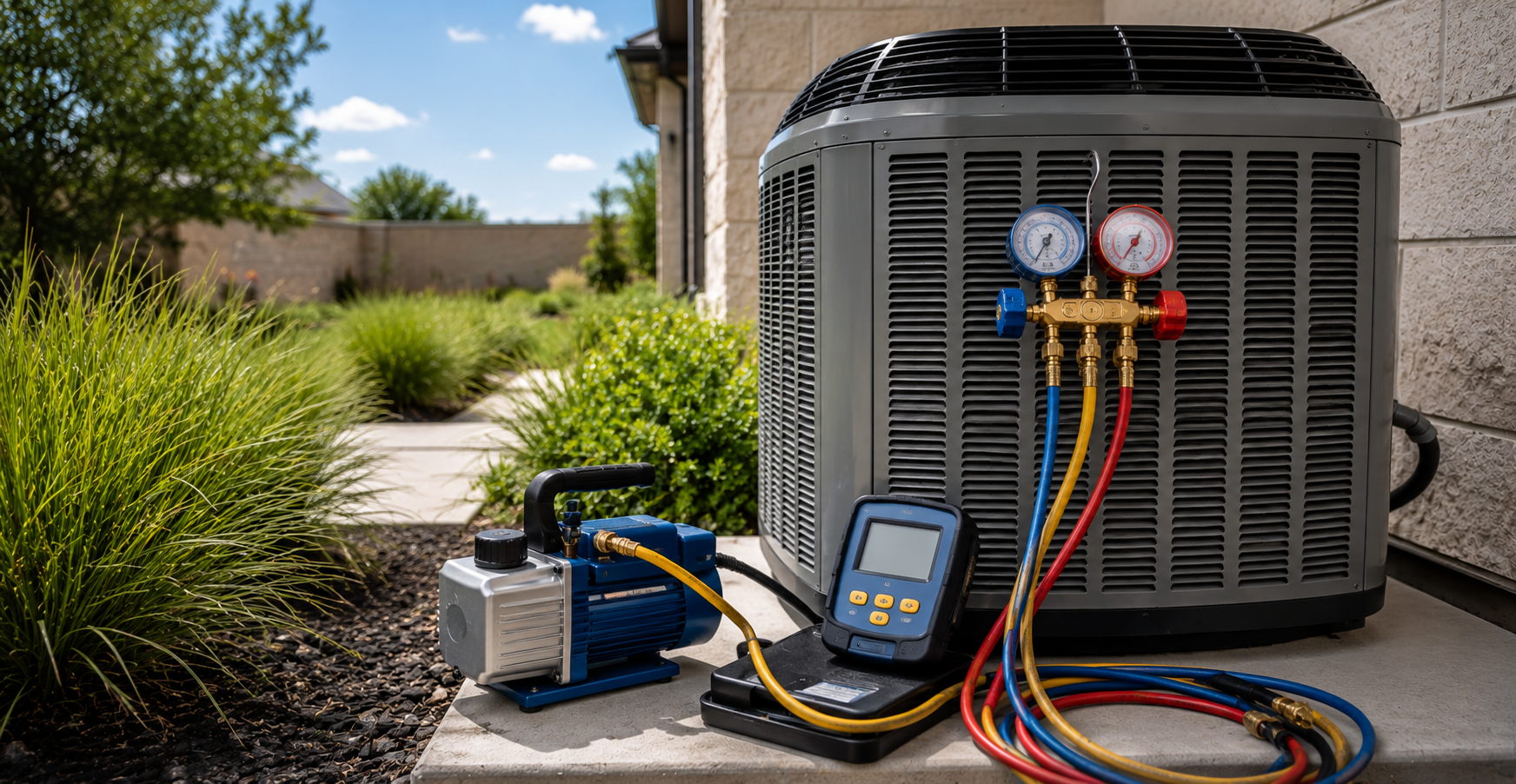
Refrigerant leaks are the number one AC failure we diagnose across Bexar, Comal, and Guadalupe counties. Every truck carries an electronic leak detector, dry nitrogen for pressure testing, and the three refrigerants in current use (R-410A reclaimed, R-454B, R-32). Every tech is EPA 608 Universal certified and A2L trained, a federal requirement on the new refrigerants since January 2025.
The Three Most Common Leak Sources in SA Systems
Formic-Acid Evaporator Coil Corrosion
Most Common Indoor Leak
Schrader Valve UV Damage
Lightning Surge Leak
Brazed-Joint Vibration Fatigue
Line Set and Connections
Leak Source #1: Formic-Acid Evaporator Coil Corrosion
What you notice
the system runs but never reaches the thermostat setpoint. Indoor humidity climbs above 60% and the house feels sticky. Sometimes ice forms on the copper lineset, and utility bills creep up month over month.
Why it is common in SA
aluminum coils develop microscopic formicary cracks when indoor air carries VOCs from cleaning chemicals, paint, and new cabinetry off-gassing. Combined with our long humid cooling season, SA indoor air is unusually corrosive to aluminum. Many R-410A coils built in the 2010s are especially vulnerable.
How we find and fix it
electronic detection across the evaporator compartment and plenums. If the leak is too small to register, UV dye plus a 24 to 48-hour recheck. Vacuum to 500 microns confirms the seal. Surface leaks on accessible coils can be patched; corrosion that reaches the brazed joints usually needs the coil replaced. On a 12-plus-year-old R-22 or early R-410A system, a full coil replacement often points toward system replacement instead. We walk you through both numbers and you choose.
Leak Source #2: Schrader Valve UV Damage and Lightning Surge
What you notice
cooling capacity drops across a single season. The lineset at the outdoor unit may feel oily near the service ports. After a monsoon thunderstorm, the system never cools the same again, and that is the lightning-surge signature.
Why it is common in SA
Schrader-valve rubber seals degrade under UV, and the south-facing condenser side gets intense UV nine months a year at SA latitudes. Monsoon lightning from June through September stresses the valve cores. Original seals on many SA installs are giving up by year five to seven.
How we find and fix it
electronic detector sweep at both service ports and the brazed lineset entry. Replace the core, recharge, and add a unit-level surge protector ($50-$100 part that prevents most lightning-driven board and valve failures). Schrader valve replacements are the cheapest leak repair on the menu, usually under $300 including the recharge if caught early.
Leak Source #3: Brazed-Joint Vibration Fatigue (line set and connections)
What you notice
cooling loss after a recent compressor replacement, a wind event, or rooftop work near the condenser. Faint hissing along the lineset. On 15-plus-year-old installs, oil staining at the brazed connections.
Why it is common in SA
SA condensers run 14 to 16 hours a day during sustained 100-plus stretches. Vibration cycle counts over a decade are double what Dallas or Austin sees. Wind-driven lineset movement and attic-to-outdoor thermal cycling concentrate stress at the brazed joints.
How we find and fix it
nitrogen pressure test at 300-plus PSI for 15 minutes. Pressure drop tells us a leak exists. Electronic detector then narrows the exact joint. Repair, pressure-test again, vacuum, recharge. Most of the cost is the pressure-test, vacuum, and recharge sequence, not the braze itself. If the lineset is corroded throughout or the insulation has rotted off, we recommend a lineset replacement at the same time.
How the Leak Repair Actually Runs
-
You call (210) 897-8658. An Above & Beyond team member answers, no offshore call center. We ask about symptoms, system age, refrigerant type if known, and whether anyone in the home is heat-vulnerable. Most diagnostics get same-day or next-business-day.
-
30 to 60 minutes. Electronic detector across the suction and liquid lines, evaporator compartment, condenser coil, and Schrader valves. UV dye or nitrogen pressure decay test if needed. The $89 fee is waived when you proceed with the repair on the same visit.
-
We tell you the exact source (formicary corrosion, Schrader valve, brazed-joint, or a less common location) and the repair-vs-replace math on your specific system. Parts, labor, refrigerant volume, and warranty terms are on the estimate before any work begins.
-
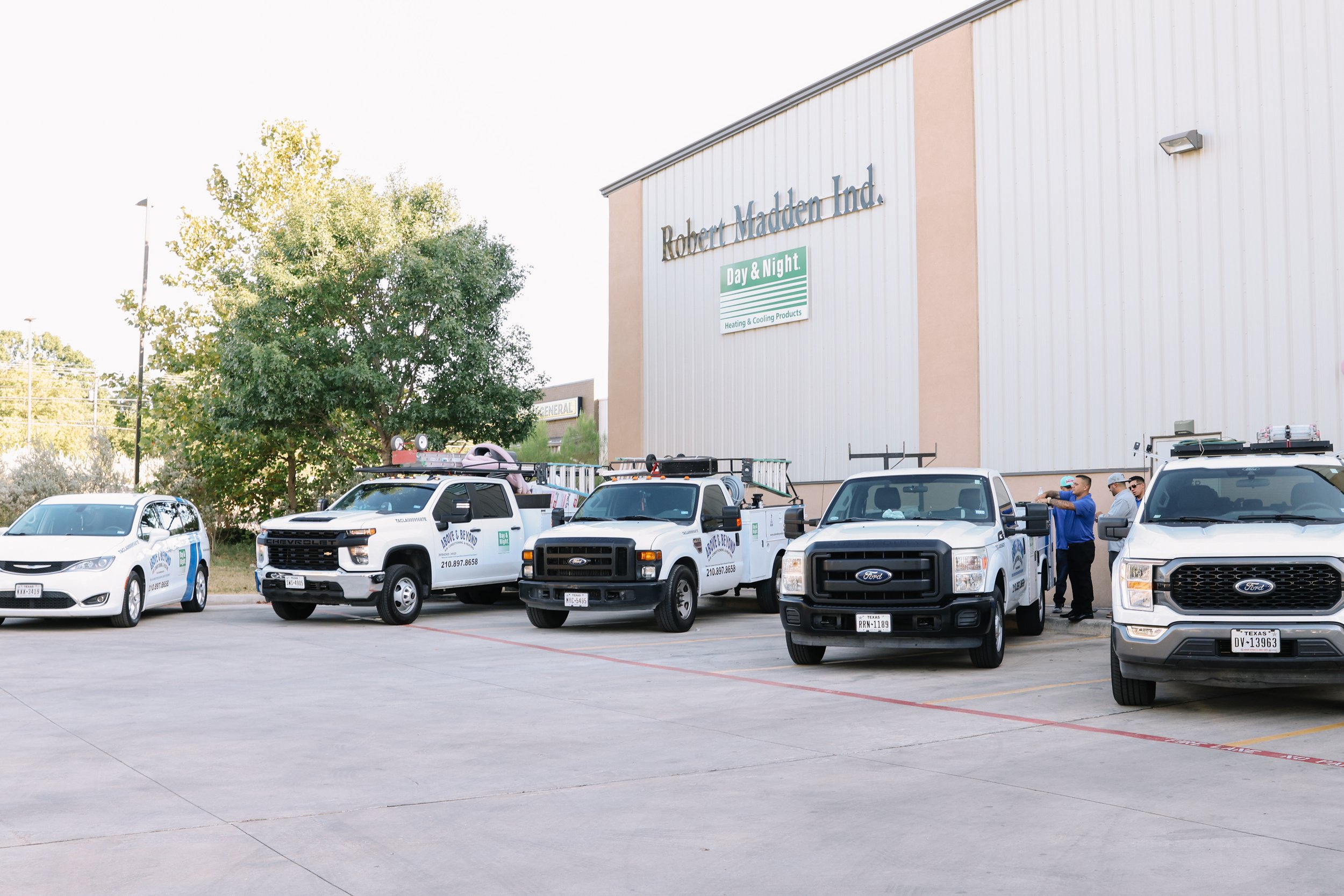
Patch the brazed joint, replace the Schrader valve core, or replace the evaporator coil, whichever your system needs. Day & Night Elite Dealer status gets us factory-direct warranty parts in 24 hours instead of the 5 to 10 business days a non-dealer waits.
-
Pressure test at 300-plus PSI verifies the repair. Vacuum to 500 microns removes moisture before recharging. Refrigerant is added by weight to the manufacturer nameplate, not by pressure or by guess. Superheat and subcool readings confirm the charge under load.
-
We run the system for 15 minutes and verify temperature split (18 to 22 degrees at SA conditions), pressures, and amp draws. You get before-and-after photos, gauge readings, and written warranty terms. If the same leak returns inside 30 days, we come back free.
What Every Leak Repair Visit Includes
| Component or Step | What We Do | Notes |
|---|---|---|
| Electronic Leak Detection | Sweep coils, brazed joints, and Schrader valves with electronic detector. | Tommy's primary technique. |
| UV Dye Injection | Inject dye, run 24-48 hours, recheck with UV lamp. | If detector cannot pinpoint. |
| Nitrogen Pressure Test | Pressurize to 300-plus PSI for 15 minutes; gauge drop indicates a leak. | Closed-system verification. |
| Schrader Valve Core Check | Cap-test both service ports; replace cores as needed. | Second-most-common leak. |
| Evaporator Coil Probe | Inspect for formicary corrosion and oil residue; photograph. | On every leak call. |
| Condenser Coil Probe | Inspect outdoor coil; check for impact, fin damage, oil residue. | On every leak call. |
| Drain Line and Float | Rule out drain-clog symptoms before diagnosing a leak. | Most-misdiagnosed SA issue. |
| Vacuum to 500 Microns | Pull vacuum, verify under 500 microns, hold 5 minutes. | Removes moisture pre-recharge. |
| Recharge by Weight | Charge to manufacturer nameplate by weight, not by pressure. | R-410A, R-454B, R-32, or R-22 reclaimed. |
| Written Findings Report | Photos, gauge readings, warranty terms. | Emailed end of visit. |
Refrigerant Leak Repair Pricing in San Antonio
The $89 diagnostic is waived with same-visit repair. Final pricing depends on leak location, system age, and refrigerant type.
| Repair | Price Range | Typical Visit Time |
|---|---|---|
| Leak Diagnostic Visit | $89 (waived with repair) | 30 to 60 minutes |
| Schrader Valve Core | $150 – $300 | Under 1 hour plus recharge |
| Brazed-Joint Line Set Repair | $200 – $800 | 2 to 4 hours including test, vacuum, recharge |
| Refrigerant Leak Repair (general) | $200 – $1,400 | Patch to coil-adjacent repair |
| Condenser Coil Cleaning | $150 | Chemical clean and rinse, about 1 hour |
| Evaporator Coil Cleaning | $150 – $400 | 1 to 3 hours, access-dependent |
| Evaporator Coil Replacement | $600 – $2,000 | 4 to 6 hours; refrigerant separate |
| Refrigerant by Type | Varies, R-22 reclaimed most expensive | Included in repair estimate |
| Surge Protector (Unit-Level) | $50 – $100 | Prevents most lightning damage |
5.0 Rated — Hundreds of Verified Reviews
Real customers. Real names. Real service calls. Live Google reviews help customers see the trust before they book.
Frequently Asked Questions
How do you know if my AC is actually leaking and not just under-charged from a bad installation?
Two checks. A nitrogen pressure decay test (300-plus PSI for 15 minutes, a drop indicates a leak) plus electronic detection along the lines, evaporator compartment, and Schrader valves. If both pass, the charge was wrong at install. If either fails, we have located a leak.
Is my old R-22 system worth repairing if it has a leak?
Usually no. R-22 has not been manufactured since 2020, and only reclaimed R-22 is available at sharply higher per-pound cost. A small leak on a healthy R-22 system can be patched to buy another season. A major leak on a 12-plus-year-old R-22 system almost always points to replacement.
How long does a leak repair take?
Diagnosis is 30 to 60 minutes on-site. Schrader valve plus recharge runs about an hour. Brazed-joint line-set repair runs 2 to 4 hours including pressure test, vacuum, and recharge. Evaporator coil replacement runs 4 to 6 hours.
Ready To Schedule HVAC Service?
Whether your AC stopped cooling, your furnace needs a tune-up, or you want a second opinion, one call connects you with a real Above & Beyond team member.
(210) 761-7747
Same-Day Capacitor Replacement
Monday through Friday: 7:00 AM to 7:00 PM | Saturday: 8:00 AM to 5:00 PM | Sunday: Emergency Dispatch Only | After-Hours Emergencies: 24/7, call (210) 761-7747