
Is Your AC Oversized? The Cold-But-Clammy Warning Sign
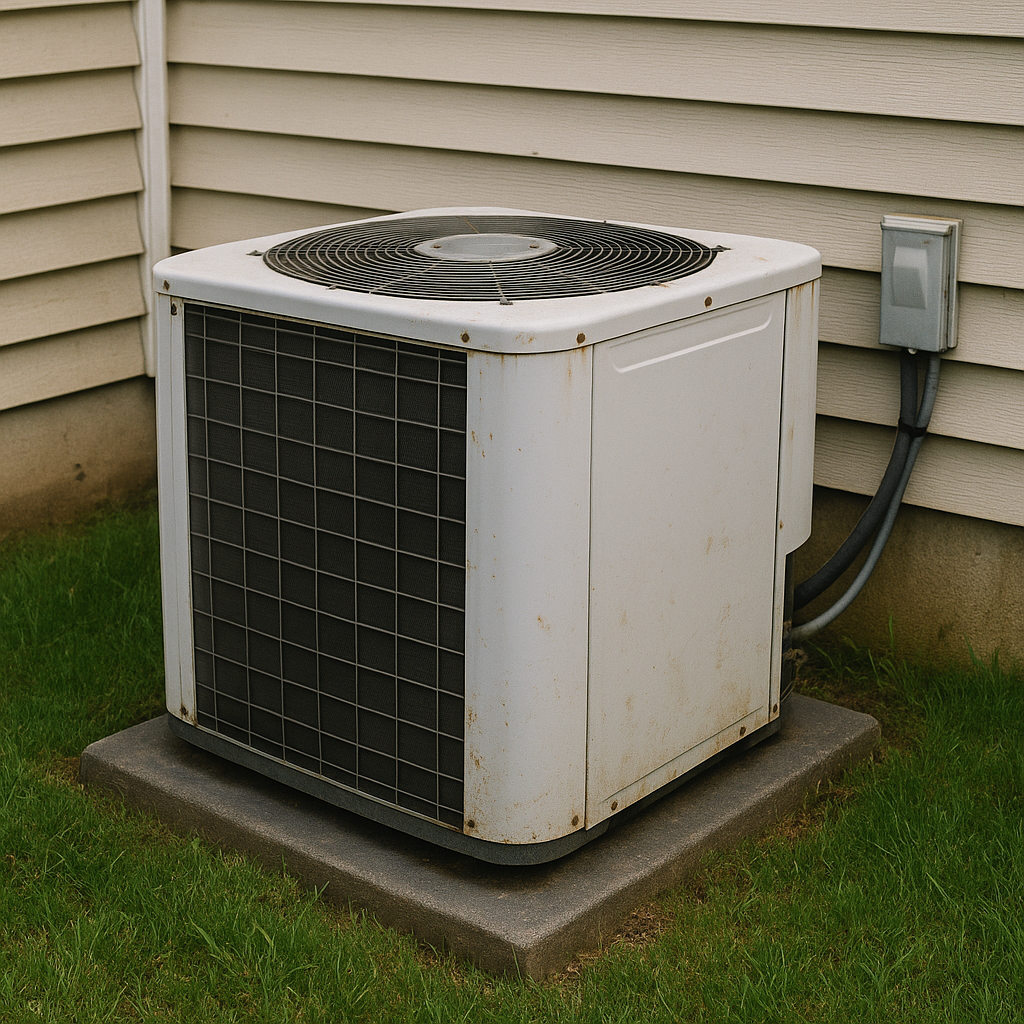
There is a stubborn idea in cooling that a bigger unit is a better unit, that more tons means more comfort. With air conditioning, the opposite is often true. A system that is too large for the house it serves can leave you cold and damp, paying more to run it, all while the equipment wears out faster than it should. If your home never quite feels right, no matter where you set the thermostat, the size of the box outside may be the reason.
What Oversizing Actually Does
An air conditioner does two jobs at once. It lowers the air temperature and pulls moisture out of the air as it passes over the cold indoor coil. Both jobs take time. Temperature drops quickly, but moisture removal is slow and steady, occurring only while the system is running and air is moving across the coil.
An oversized unit has too much cooling capacity for the space. It blasts cold air in a few minutes, reaches the temperature you set on the thermostat, and shuts off. The problem is that it shut off before it ran long enough to wring much water out of the air. Then the room warms up a little, the thermostat calls again, the unit fires back up, cools fast, and quits again. This rapid on-off pattern is called short-cycling, and it is the signature behavior of a system that is too big.
Think of it like a runner who sprints fifty yards, stops, catches their breath, then sprints again, over and over. They never settle into the steady pace where the real work gets done. A right-sized AC is the marathoner running a long, even stride, and that longer run is exactly what removes humidity and evens out the temperature across the house.
The Signs Your System Is Too Big
The symptoms tend to show up together, and once you know what to look for, they are hard to miss.
The house feels cold but clammy. This is the headline symptom. The thermostat reads a cool number, yet the air feels damp, sticky, or heavy. Because the unit reaches the set temperature so quickly, it never runs long enough to dehumidify, leaving you with cold, moist air. People often respond by setting the thermostat even lower, which makes the clamminess worse, not better.
The AC runs in short bursts. Watch or listen to the outdoor unit. If it kicks on, runs for only a few minutes, then clicks off, waits, and starts again a short while later, that frequent cycling is a red flag. A properly sized system on a warm afternoon should run for longer, steadier stretches.
It reaches the setpoint almost instantly. If the space drops to your target temperature within a few minutes of the system starting, the unit is likely delivering far more cooling than the room needs.
Rooms cool unevenly, and it never settles. Because the runs are so short, air does not circulate long enough to balance out. One room is frigid while another stays warm, and the house never reaches that steady, uniform feel.
The equipment is noisy and constantly starting and stopping. Each start is the loudest, hardest moment for the system, so an oversized unit that cycles often is both louder and more noticeable than one that runs quietly for longer periods.
Why It Happens
Oversizing usually traces back to how the system was chosen. The most common cause is sizing by rule of thumb, where someone estimates tonnage based on square footage alone. Square footage is only one input. A house's real cooling load depends on its windows, insulation, ceiling height, sun exposure, and how leaky or tight it is. Two homes of the same size can need very different amounts of cooling.
Another frequent cause is the "one size up" replacement. When an old unit is swapped out, it is tempting to install something a little bigger for insurance, or simply to copy whatever was there before, even if the original was already too large. Undersizing gets complaints on the hottest day of the year, so installers sometimes err toward too big, and the resulting humidity problems are quieter and easier to overlook.
Ductwork plays a role, too. If the duct system is not matched to the equipment, airflow problems can compound symptoms and worsen comfort, regardless of the unit's raw capacity.
Why It Matters Beyond Comfort
Short-cycling is not just annoying. Every time the compressor starts, it draws a heavy current surge and works at its hardest. A unit that starts and stops many times an hour racks up far more of those hard moments than one that runs in long, calm stretches, and that wear adds up on the compressor and the electrical parts that switch it on and off.
The energy side is similar. All those start-ups burn more power than steady running, so an oversized system can cost more to operate even though it spends less total time running. And the humidity it leaves behind is its own problem. Damp indoor air feels warmer than it is, encourages that "set it colder" reflex, and in a persistently humid house raises the risk of mold and that musty, heavy feeling that no thermostat setting seems to fix.
In a humid climate, the moisture symptom is the loudest tell of all, because there is plenty of water in the air waiting to be removed, and an oversized unit simply never gets to it. In a drier stretch, the same unit might feel merely inefficient rather than clammy, which is one reason the problem can hide for part of the year and then become obvious when the muggy weather returns.
Rule Out the Other Causes of Short-Cycling First
Short bursts of cooling do not always mean the unit is too big. Several other issues cause a system to cycle on and off, each requiring a different fix.
Low refrigerant or a frozen indoor coil will also make an AC cut in and out, but these usually come with weak or fading cooling and sometimes visible ice on the lines or coil, not the cold-but-humid combination that points to oversizing. A failing or poorly placed thermostat can cause erratic cycling on its own. Electrical faults are another possibility. The distinguishing pattern for oversizing is that the cooling is strong and fast, the house gets cold, and the air still feels damp. Strong cooling, stubborn humidity, and short runs are the oversizing fingerprint. Weak cooling plus short runs point elsewhere.
Because several of these overlap, confirming the cause is a job for a licensed HVAC professional who can measure the system's actual performance rather than guess from symptoms alone.
How the Right Size Is Found and Fixed
The tool that settles the question is a Manual J load calculation. Rather than guessing from floor area, a load calculation accounts for how much heat the house gains from its size, windows, insulation, orientation to the sun, and other factors, then matches the equipment to that actual number. It is the difference between fitting the system to the house and fitting it to a rule of thumb.
If a load calc confirms the unit is oversized, there are a few paths forward, and the right one depends on the house. A properly sized replacement is the direct fix. In many homes, a two-stage or variable-speed system is a strong option because it can run for long stretches at reduced output, which dehumidifies and balances temperatures far better than a single-stage unit that only knows full blast or off. Where humidity is the main complaint, a whole-home dehumidifier paired with a right-sized AC can pull moisture out independently of the cooling, so you are not forced to overchill the house just to feel dry.
What is worth avoiding is the instinct to fight the symptoms by cranking the thermostat colder. That deepens the clammy feeling and adds runtime without solving the underlying mismatch.
As a homeowner, your part is to observe the pattern, how long the unit runs, whether the house feels damp, whether temperatures wander room to room, and to keep the filter clean so airflow is not restricted for a reason that has nothing to do with sizing. Anything involving refrigerant, capacity, or the load calculation itself is EPA-regulated professional work and belongs with a licensed technician.
Frequently Asked Questions
Count the cycles per hour. An oversized unit often snaps on and off several times an hour with very short runs each time, whereas a low-charge or frozen-coil short cycle tends to run a while and then quit abruptly when a safety trips. Pair that cycles-per-hour count with the way the house feels: cold but still humid points at oversizing, while a fault-driven cycle usually leaves the cooling weak. Those two observations together separate a size mismatch from a mechanical trip without opening the unit.
Cooling splits into two parts: the sensible load, which is the temperature drop you feel, and the latent load, which is the moisture the coil condenses out. The latent side only kicks in once the unit has run for a while, so a system that satisfies the thermostat within a few minutes handles the sensible load and skips most of the latent. One common mistake makes it worse: setting the fan to ON instead of AUTO keeps blowing across a wet coil between cycles, which re-evaporates that collected water and sends the humidity right back into the house.
A Manual J load calculation is the method used, and it accounts for far more than square footage. It factors in air infiltration, meaning how leaky the house is, along with duct heat gain, the orientation of the windows, and the internal load thrown off by people and appliances inside. That is why two houses with identical floor area can require different tonnages: one may be tight with shaded glass, while the other leaks air and faces the afternoon sun. The equipment is matched to that calculated number, not to a rule of thumb.
Often it can. A two-stage or variable-speed unit can run for long stretches at low output rather than only at full capacity, and that extended low-output operation dehumidifies and evens out temperatures far better than a single-stage system that only operates at full blast or off. In effect, it behaves like a right-sized system across a much wider range of conditions, which is why it is a common remedy.
Yes. The compressor draws its highest current at start-up, so a system that switches on and off frequently subjects the compressor and the contactor that energizes it to far more hard starts than a system that runs in fewer, longer cycles. That repeated stress wears parts faster and consumes more energy than steady running, which shortens the equipment's overall life.
A whole-home dehumidifier ties into the return ductwork and holds indoor humidity around a 50 percent target on its own, independent of whether the AC is cooling. That lets a right-sized system handle temperature without being forced to overcool the house just to feel dry. It also earns its keep in the shoulder seasons, when the days are mild, and the AC barely comes on, yet the air is still damp. Paired with correct sizing it fills the gap the cooling cycle cannot, rather than replacing the load calculation.
Book a load-calculation check — know whether your system is truly matched to your home. Above & Beyond Air Conditioning & Heating serves San Antonio and the surrounding Hill Country. TACLA00095687E. Call (210) 897-8658 for a free diagnostic visit.
