

Condenser Coil Cleaning — Above & Beyond Air Conditioning & Heating
Right chemistry for your coil type (microchannel or copper-fin), restores SEER rating, prevents corrosion, stops compressor short-cycling.

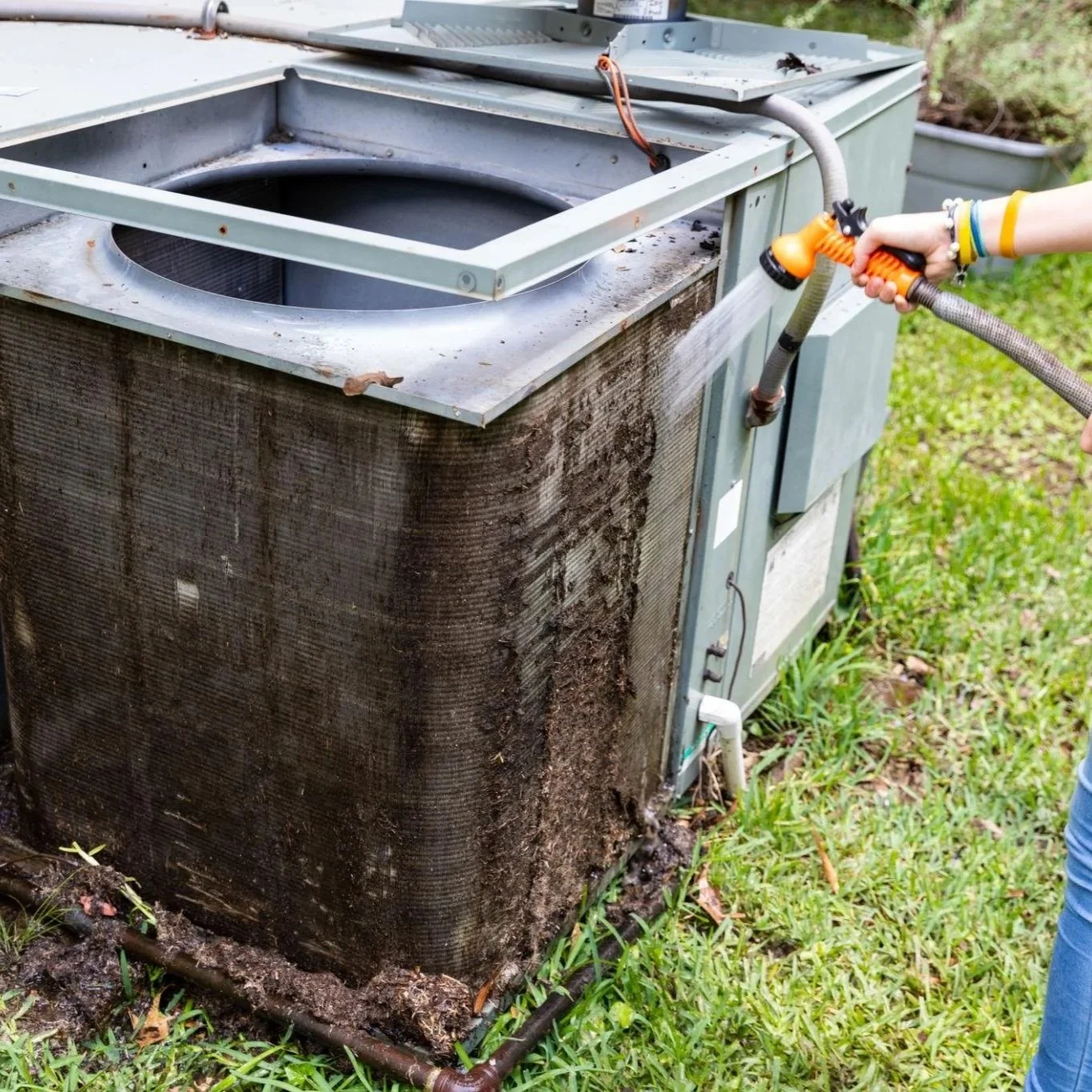


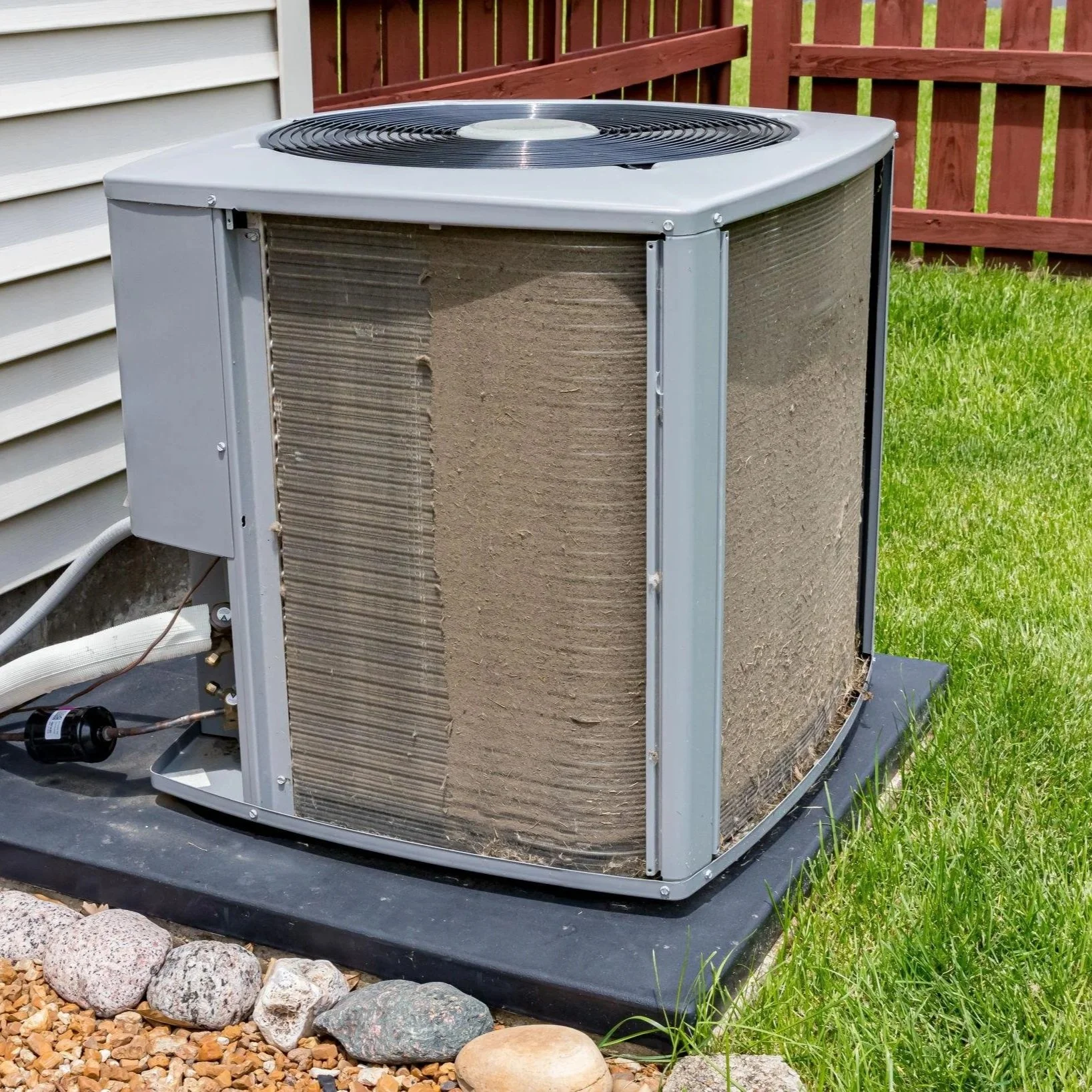
The condenser coil is the heat-rejecting half of your AC system, the large aluminum-finned surface on the outdoor unit that releases heat from the refrigerant. When it gets clogged with dust, lint, grass clippings, pet hair, hard-water mineral deposits, or pollen, it cannot reject heat efficiently. Symptoms: longer runtimes, higher CPS Energy bills, reduced cooling capacity, and accelerated compressor wear from elevated head pressure.
In San Antonio, condenser coils get dirty faster than in most climates because of our long cooling season (9 months of runtime), heavy dust load from construction activity, four allergy seasons depositing pollen, and sprinkler systems spraying mineral-rich water on outdoor units. We recommend professional coil cleaning every 1-2 years for typical SA installations, and annually for Hill Country and construction-zone installations.
Above & Beyond uses the right chemistry for your coil type, non-acid cleaners for aluminum microchannel coils and acid-rinse cleaners for copper-fin coils. Using the wrong chemistry damages the coil. Free $89 diagnostic credited back when you approve the cleaning. Written estimate first. Same-day service when you call before noon.
Three Ways Condenser Coils Get Fouled in San Antonio
Dust and Lint Buildup
Slow-Build SA Failure
Hard-Water Mineral Deposits
Hill Country Failure
Pollen and Mold Spore Coating
SA Allergy Season Failure
Fouling Pattern #1: Dust and Lint Buildup (the slow-build SA failure)
Air pulled through the condenser coil carries dust, pollen, dryer lint, pet hair, and grass clippings. Over 12-24 months, these accumulate as a thick mat on the coil fins. Symptoms: AC runtimes longer than they used to be (compressor running 25-30 minutes per cycle instead of the design 15-20), CPS Energy bills higher than the same month last year, and head pressure on the system gauges 25-50 PSI above normal. A coil cleaning restores most of the lost efficiency. Cost: $150-$285 for accessible installations.
Fouling Pattern #2: Hard-Water Mineral Deposits (the Hill Country failure)
Sprinkler systems spraying directly on the outdoor condenser deposit mineral-rich water on the aluminum coil fins. As the water evaporates in the SA heat, minerals crystallize on the fins, particularly calcium carbonate and magnesium scale. Over years, this builds up as a hard white deposit that vacuum cleaning cannot remove. Acid-rinse cleaning is required (for copper-fin coils) or specialized non-acid mineral-removal chemistry (for aluminum microchannel coils). Most common in Boerne, Fair Oaks Ranch, Bulverde, Canyon Lake, and Spring Branch. Cost: $245-$400 for mineral-removal cleaning.
Fouling Pattern #3: Pollen and Mold Spore Coating (the SA allergy season failure)
SA's four allergy seasons (cedar December through February, oak March through May, ragweed August through October, mold post-monsoon) coat outdoor condenser coils with pollen and spore residue. The oak season is the worst, with the visible oak fuzz coating that covers cars in March-April also covering outdoor AC units. Pollen reduces airflow through the coil and creates a perfect substrate for mold growth when combined with sprinkler water or rain. Annual cleaning before the start of peak summer cooling prevents the pollen layer from becoming a permanent issue.
Our Condenser Coil Cleaning Process

-
A real San Antonio team member answers. We confirm whether this is a maintenance cleaning or a diagnostic call for efficiency loss, and confirm the brand and approximate age so we bring the right chemistry.
-
Text with the tech's name and photo. No mystery dispatch.
-
Roughly 15-25 minutes. We identify the coil type (microchannel vs copper-fin), assess the fouling severity (light, moderate, heavy), measure head pressure and compressor amperage to quantify the efficiency loss, inspect for fin damage, and identify any sprinkler-spray exposure pattern.
-
Verbatim parts and labor. For routine cleaning, this is a fixed-price service. For coil with significant mineral buildup or mold, we quote the appropriate chemistry separately.
-
Disconnect power at the outdoor disconnect. Remove top grille and any service panels. Cover electronics and refrigerant lines with protective sheeting. Apply chemistry to coil fins (chemistry depends on coil type), dwell time per manufacturer specs (typically 5-15 minutes). Rinse with low-pressure water (high pressure damages fins). Straighten any bent fins with fin combs. Inspect drain pan for mineral or biological buildup.
-
Reassemble outdoor unit, restore power, run cooling cycle for 15-20 minutes. Re-measure head pressure and compressor amperage to verify the efficiency restoration. We log the readings on the service record. 30-day callback warranty.
Condenser Coil Cleaning Pricing in San Antonio
Diagnostic: $89 diagnostic fee. Credited back when you approve the cleaning. $89 if you decline, no pressure, no upsell.
| Service | Price Range |
|---|---|
| Light cleaning (annual maintenance, accessible installation) | $150 – $225 |
| Standard cleaning (12-24 month buildup) | $185 – $285 |
| Heavy cleaning (heavy biofilm, attic-installed condenser, requires extra access work) | $245 – $400 |
| Mineral-scale removal cleaning (Hill Country hard-water buildup) | $245 – $400 |
| Coil fin straightening (hail damage, debris) | $145 – $285 (included free with cleaning when minor) |
| Sprinkler-head redirect consultation (sprinkler tech referral) | $75 – $125 typical |
| Outdoor unit pad re-leveling | $45 – $95 |
| Surge protector install during the visit | $40 – $60 |
| Condenser coil mold treatment | $85 – $185 (added to cleaning when mold is present) |
5.0 Rated — Hundreds of Verified Reviews
Real customers. Real names. Real service calls. Live Google reviews help customers see the trust before they book.
Above & Beyond Coil Cleaning vs. National HVAC Chains
| Feature | Above & Beyond | National HVAC Chains |
|---|---|---|
| Coil Type Identification | We identify microchannel vs copper-fin before chemistry selection | Often same chemistry used regardless |
| Chemistry Selection | Non-acid for microchannel, acid-rinse for copper-fin | Often generic coil cleaner regardless of type |
| Cleaning Duration | 60-90 minutes including dwell time and fin straightening | Often 10-20 minutes (hose-down only) |
| Fin Straightening | Included at no extra charge for minor damage | Often upsold separately |
| Efficiency Verification | Head pressure and compressor amperage measured before and after | Rarely done |
| Diagnostic Pricing | $89 credited back when you approve the cleaning | $89 to $149 charged upfront, often not refundable |
| Maintenance Plan Coverage | Coil inspection in spring tune-up; cleaning when needed | Often coil cleaning excluded from base plan |
| Chemical Containment | We protect electronics and capture runoff | Often runoff into landscaping |
| Estimate Format | Written estimate with verbatim parts and labor | Verbal estimates, change orders common |
| Warranty on Service | 30-day callback warranty included | Often 7 to 14 days, sometimes nothing |
Frequently Asked Questions
How much does condenser coil cleaning cost in San Antonio?
Light annual cleaning runs $150-$225. Standard cleaning (12-24 month buildup) runs $185-$285. Heavy cleaning or mineral-scale removal runs $245-$400. The $89 diagnostic is credited back when you approve the cleaning. Maintenance plan members get coil inspection at the spring tune-up included in the plan.
How often should I clean my outdoor AC coil in San Antonio?
Every 1-2 years for typical SA installations. Annually for Hill Country (hard water from sprinklers), construction-zone homes (within 2-3 miles of active construction), and pet-heavy households. Maintenance plan members get coil inspection at every spring tune-up.
Will coil cleaning lower my CPS Energy bill?
Yes, almost always. A heavily fouled coil can lose 20-30% of its cooling efficiency, meaning your AC runs longer for the same amount of cooling. Restoring the coil to clean condition recovers most of that lost efficiency, typically reducing summer electric bills by 10-25%. Customers usually see the savings recover the cleaning cost the same month.
Can a dirty outdoor coil damage my compressor?
Yes. A fouled coil restricts heat rejection, raises refrigerant head pressure, increases compressor amperage, and accelerates compressor wear. Compressors that fail at year 8-9 instead of year 12-15 often died because the coil was never cleaned. Annual cleaning is one of the highest-ROI maintenance items on an AC system.
Ready to Book Your AC Maintenance? Call Above & Beyond Today
A real San Antonio team member answers, never a phone tree. Free written estimate before any work. TDLR Class A licensed, $2M general liability, 30 years in the SA trade.
(210) 761-7747
Same-Day Capacitor Replacement
Monday through Friday: 7:00 AM to 7:00 PM | Saturday: 8:00 AM to 5:00 PM | Sunday: Emergency Dispatch Only | After-Hours Emergencies: 24/7, call (210) 761-7747