
Quick Answer: An AC condensate drain line clogs when algae, biofilm slime, dust, and mold build up inside the PVC pipe until water can no longer flow through. You can often clear it yourself by pulling the clog with a wet/dry vacuum at the outdoor termination, then flushing the line through the access tee with distilled vinegar. Recurring clogs, a rusted pan, or coil trouble need a technician.
Your air conditioner does two jobs at once. It cools the air, and it pulls moisture out of it. That second job is why a small pipe runs out the side of your house, and it is also why that pipe eventually becomes the most common reason a working AC suddenly floods the floor or shuts itself off.
How Condensate Drainage Actually Works
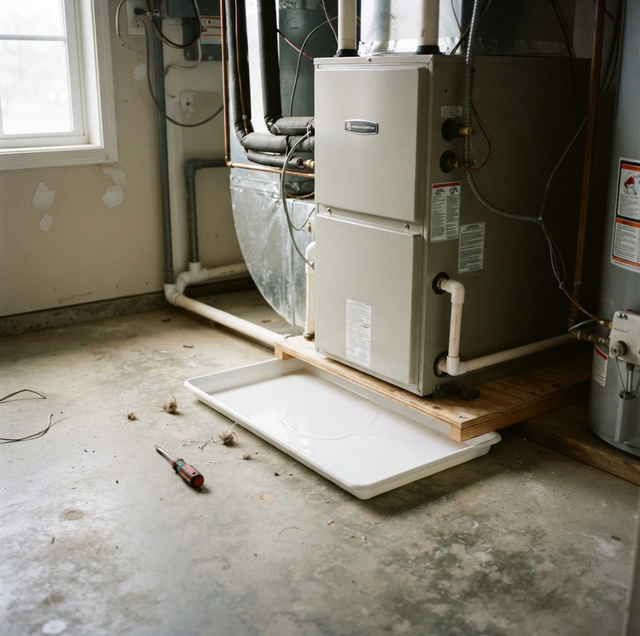
When warm household air passes over the cold evaporator coil inside your air handler, water vapor condenses on the coil the same way beads form on a glass of iced tea. That water drips down into a shallow drain pan sitting beneath the coil. From the pan, gravity carries it through a PVC condensate line, usually a white pipe about three-quarters of an inch across, that runs to the outdoors, to a floor drain, or to a utility sink.
On a humid day, a running system can pull several gallons of water out of the air. All of it travels through that one small pipe. The line stays wet, dark, and warm, which is exactly what algae, mold, and bacterial slime love. Over months, that growth combines with dust pulled through the system and hardens into a plug. Water backs up behind it, the pan overflows, and the trouble starts.
Why the line clogs year-round, not just in summer: It is tempting to blame humid cooling months, and it is true the system produces more condensate and grows algae faster when it runs long hours in warm, muggy weather. But the clog itself is a slow accumulation. The biofilm that seeds a blockage keeps living inside a damp line through mild months and shoulder seasons too, and mineral scale from hard water deposits regardless of the calendar. A line that only ran lightly in spring can still be half-choked by the time real heat arrives. Think of it like a slow drain in a rarely used guest bathroom: the gunk builds quietly whether or not anyone is watching.
The Warning Signs of a Clogged Drain Line
Most clogs announce themselves before they cause real damage, if you know what to watch for.
Water pooling around the indoor unit: A puddle near the base of the air handler or furnace, or a damp ring on the ceiling below an attic unit, usually means the pan has filled and spilled because water has nowhere to go.
A full or overflowing drain pan: If you can see the pan and it holds standing water while the system runs, the line downstream is restricted.
The system shuts itself off: Many setups include a float safety switch that senses a rising water level and cuts power to the system before the pan overflows. If your AC stops cooling for no obvious reason on a hot day and the pan is full, a tripped float switch is a strong suspect.
A musty or moldy smell from the vents or near the unit. Standing water in the pan and line grows the organisms that produce that damp, sour odor.
Higher humidity indoors even while the AC runs, because a backed-up system cannot shed the moisture it removes.
Clearing the Line Yourself
A homeowner can safely handle an ordinary clog with common tools. Refrigerant lines and the electrical compartment are off limits, but the condensate side is approachable.
Turn the system off first: Shut the air conditioner down at the thermostat and at the breaker before you work near the drain. This keeps the system from pushing more water while you work.
Find the access point: Near the indoor unit, look for a PVC tee fitting with a removable cap sticking up from the drain line. That opening lets you flush and inspect the line. Pull the cap and set it aside.
Pull the clog from the outdoor end: Go to where the line terminates outside, at the pipe stub near the ground or foundation. A wet/dry vacuum, the shop vac in most garages, is the workhorse here. Hold the vacuum hose against the end of the pipe, seal the gap with your hand or a rag so it grabs suction, and run it for a minute or two. The suction pulls the slime plug and standing water back toward you and out of the line. You will usually hear the clog release and see dark water and debris collect in the vacuum.
Flush the line clean: Back at the access tee, pour distilled white vinegar through the opening and let it sit for about half an hour, then follow with a slow rinse of water to confirm it runs freely to the outside. Vinegar dissolves the biofilm and discourages regrowth without the harshness of stronger chemicals. Replace the cap when you are done.
A quick safety note on what to pour: if your line drains onto a flower bed, lawn, or shrubs, do not send bleach down it, and do not make repeated harsh-chemical flushing a habit. Repeated bleach can degrade older PVC glued joints and kill whatever it lands on outside. Distilled vinegar is the safer default for routine work.
The Float Safety Switch, Your Backup
That float switch mentioned earlier is worth understanding, because it is the difference between a minor annoyance and a soaked ceiling. It is a small device mounted in the drain pan or on the drain line that floats up as water rises. When the level gets too high, it opens the circuit and stops the system, forcing the water problem to get your attention before it damages drywall, flooring, or insulation.
If your AC will not turn on and everything else seems fine, a tripped float switch protecting you from an unseen clog is a real possibility. Clearing the line and letting the pan drain usually lets the switch reset and the system restart. If it trips again soon after, the underlying clog was not fully cleared, or something else in the pan or coil needs a closer look.
Preventing the Next Clog
Clearing a line is satisfying, but keeping it clear is easier than repeating the job every few months.
Pouring distilled white vinegar through the access tee every couple of months during heavy cooling use is the single most effective homeowner habit for keeping this line clear, since it stops biofilm from taking hold before it hardens into a plug. Keeping the air filter fresh helps too, because less dust reaching the pan means less material to bind up into a clog.
Use drain pan tablets: Slow-dissolving tablets placed in the pan release a mild treatment as condensate flows over them, discouraging algae and slime between flushes. They are inexpensive and last weeks.
Keep the filter fresh: A clean air filter means less dust reaches the coil and the pan, which means less material to bind up into a clog. A neglected filter feeds the very debris that plugs the line.
Watch the pan during peak season: A glance at a visible pan now and then tells you early whether water is draining or sitting.
When to Call a Professional
Some situations are past the reach of a shop vac and vinegar.
If the line clogs again within weeks of a thorough clearing, something structural is wrong: an improper slope, a sagging section holding water, or a partial blockage deeper than a vacuum can reach. If the drain pan is rusted, cracked, or corroded, it will keep leaking no matter how clear the line is and needs replacing. If you find the evaporator coil iced over, frozen, or heavily fouled, or if you smell a persistent moldy odor after cleaning, a technician should inspect the coil and pan together. And anything involving the refrigerant circuit or the electrical side of the unit is strictly professional territory. A trained tech can also install or test a float switch if yours is missing or failed.
Frequently Asked Questions
Most simple slime clogs release within one to two minutes of steady suction at the outdoor termination. If two or three attempts of a minute each produce no water and no debris, the blockage is likely deeper in the line, or the pipe has a sag holding a solid plug, which is the point to stop and call a technician rather than keep forcing it.
No. The condensate line is PVC, which softens around 140 to 160 degrees Fahrenheit, and boiling water can warp the pipe or loosen a glued joint. Warm water is fine for a rinse, but room-temperature distilled vinegar followed by a gentle water flush does the dissolving work without any heat risk to the plastic.
That bend holds a small plug of water that seals the line against the pressure inside the air handler cabinet. Without it, a blower under negative pressure can suck air backward up the drain and stop condensate from flowing out, or push air out and let sewer-style odors in on positive-pressure setups. A dry or missing trap is a common reason a line seems clogged when the pipe itself is actually clear.
An ultraviolet lamp aimed at the coil and pan area suppresses the mold and algae growth that seeds most clogs by disrupting the organisms' ability to reproduce. It does not clear an existing blockage or replace vinegar flushing, but homes with a coil-mounted UV system generally see slower biofilm buildup in the pan and the first stretch of line.
Look at the water color and any residue. Clear water that drains promptly is healthy. A thin green or black film points to algae and biofilm. Rust-colored staining or flaking metal in the pan signals the pan itself is corroding and nearing failure, while a chalky white crust indicates hard-water mineral scale, which builds faster on well water and needs more frequent flushing to stay ahead of.
Not directly. A thermostat reads temperature and runtime, not water level. What can alert you is a float switch wired to trip the system, sometimes paired with a separate leak or water sensor placed in the pan or on the floor nearby that sends a phone notification. If early warning matters to you, ask about adding a wet-switch leak sensor rather than relying on the thermostat.
Book a drain line clearing before a clog floods your ceiling — keep your AC running and your floors dry all season. Above & Beyond Air Conditioning & Heating serves San Antonio and the surrounding Hill Country. TACLA00095687E. Call (210) 897-8658.
