
Signs Your Ductwork Is Leaking — and Wasting Conditioned Air
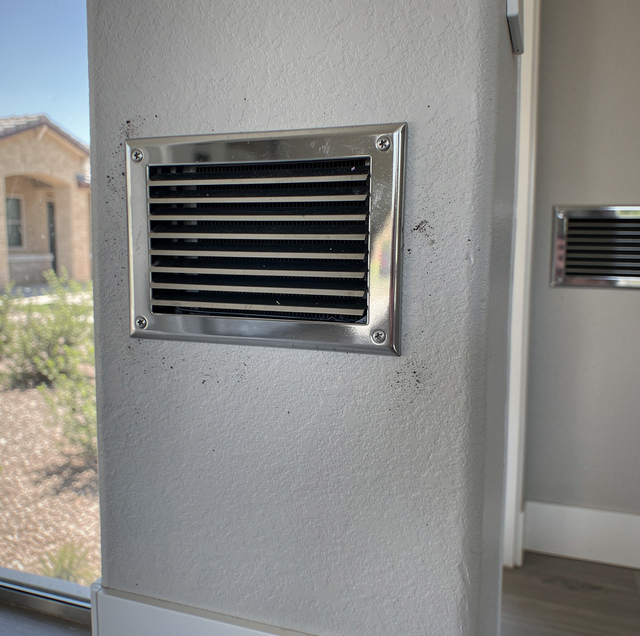
One supply register blows noticeably weaker than the one right beside it, even though both sit on the same branch and the same blower. Hold a hand up to each for a few seconds, and the difference is obvious. That mismatch, felt at a single grille, is usually the first physical sign that a duct run has come apart somewhere between the plenum and the room, not a sign that the system itself is failing.
Ductwork carries conditioned air from the blower through a network of supply and return trunks, takeoffs, register boxes, and branch runs to every register in the house, and back again to the coil through the return side. A joint that has separated, a liner that has pulled loose from a collar, or a seam that never sealed right in the first place lets air escape before it does its job, in both directions and in every season the system runs. The signs below are what that loss looks, sounds, and feels like from inside the house.
Uneven Temperatures from Room to Room
A bedroom at the end of the hall runs a few degrees warmer than the rest of the house, or the upstairs never quite matches what the downstairs thermostat reads. (A single room that stays hot on its own has its own separate set of causes; this sign is about a broader pattern that tracks with distance from the plenum, not one closed door or one bad register.) That pattern points to volume loss somewhere along the branch feeding that space, from a collar that has pulled away from the trunk or a joint where the mastic has failed.
Weak Airflow at the Supply Registers
Airflow felt directly at the grille, not just the room's temperature, is its own tell: a hand held close to a register barely detects movement, or a tissue held near the slots doesn't move at all. The blower pushes a set volume into the trunk the same way water leaves a tap into a bucket; carry that bucket across a yard with a crack in the side and what arrives at the far end is whatever survived the walk, not what left the tap. A kinked or crushed flex run, a joint that has separated, or a seam that lost its seal has the same effect on the air moving toward that register.
The System Runs Longer Without Reaching Setpoint
Cycles stretch past when they should end, and the thermostat still reads a degree or two off setpoint well after the system should have caught up. Some of the air being pushed out is being delivered outside the rooms it's meant to reach, so the space stays under-served and the equipment keeps calling. Air drawn in on the return side from outside the conditioned envelope changes the mix arriving at the coil, and static pressure at the blower shifts as well, both of which reduce the capacity that actually reaches the house. This shows up on the heating side too: a furnace or heat pump chasing a leaking distribution system runs long, recovering from a setback the same way the AC does on a hot afternoon.
A return-side leak in a closet or attic shared with a gas furnace or water heater can draw combustion byproducts into the airstream along with unconditioned air. Have any return leak in a shared mechanical space checked promptly.
Heating and Cooling Bills That Climb in Both Seasons
When a supply duct leaks into an attic or crawlspace, the system pays to condition air that never reaches a room, then runs longer to make up the shortfall. That shows up as bills that climb in summer and in winter without a rate change or a change in how you set the thermostat. A bill is a weak signal on its own, since weather, rates, and aging equipment all move it too, but paired with the room-to-room differences above, it points toward the ducts.
Dust Buildup and Streaking Around Vents and Boots
A gray or black smudge traces the ceiling or wall around one register boot, or dust collects faster near that grille than the others in the house. Air moving through a gap at a seam or a boot connection carries fine particulate from the surrounding wall or ceiling cavity, and that turbulence deposits a visible line along the drywall edge over time. It tends to show up first at the register closest to the leak, before it's obvious anywhere else in the room.
A Hot or Humid Closet, Attic, or Utility Space
A mechanical closet stays noticeably warmer than the hallway outside it, or the ceiling below an attic duct run develops a faint heat or humidity halo that wasn't there before. Conditioned air escaping from a trunk or plenum connection raises the temperature and humidity of the surrounding unconditioned space, whether that's a hard-freeze night calling for heat or a long cooling season calling for AC.
Whistling or Roaring Air at a Joint
A hiss, whistle, or low roar near a plenum connection or a seam where duct board panels meet is air being forced through a narrow gap at full system pressure. It tends to be loudest right where the blower is working hardest against the resistance already built up in that section of the run, which is often the same branch that's also running weak at its register.
Condensation and Sweating on Duct Exteriors
Moisture beads or drips on the outside of a metal trunk inside a mechanical closet, or a ceiling stain spreads below an attic duct run where a flex line's jacket has stayed damp long enough to soak through. Cold supply air escaping into that surrounding space pulls the temperature of every nearby surface, including the duct's own exterior, down toward the dew point, and moisture condenses wherever a surface sits below it. Left alone, that moisture works against the insulation jacket and anything else stored nearby over time.
What a Professional Duct Test Actually Finds and Seals
The table below recaps each sign, what it usually points to, and the next step worth asking for:
| Sign | Usually Points To | Next Step |
|---|---|---|
| One register weaker than its neighbors | Volume loss along that branch | Note the room and register |
| Rooms uneven despite a satisfied thermostat | Distribution loss across runs | Ask for a pressure-pan test |
| Long run times, setpoint never quite reached | Volume or return-side loss | Ask for a static pressure check |
| Streaking or dust around a boot | Air movement through a gap | Point it out at the next visit |
| Hissing or roaring at a seam | Narrow gap under full pressure | Flag for a duct blaster test |
A duct blaster test pressurizes the whole system and measures how much air escapes before it reaches the rooms it's meant to serve, giving a single number for the system as a whole. A pressure-pan test works register by register instead: with the house depressurized, a pan held over each grille in turn reads the pressure difference that shows which branches are leaking most, rather than treating the system as a single uniform problem. A static pressure reading across the filter and coil rounds out the picture, showing how hard the blower is working against resistance that shouldn't be there. A technician also walks the attic and mechanical closet directly, checking the heat, humidity, and moisture signs that aren't safe to chase without the right gear.
Cloth duct tape only bridges a gap; it isn't rated to bond to metal or duct board, and heat plus vibration break its grip over time. Mastic paste and listed foil tape are what a technician trusts to seal a duct joint.
Accessible joints get mastic or foil tape by hand; runs buried inside a wall or ceiling cavity that can't be reached that way are candidates for an aerosol interior sealing process, which seals from inside the duct rather than at each joint from outside.
Frequently Asked Questions
Both. In heating season, a supply leak sends warm air into the attic or crawlspace, and a return leak pulls cold air into the system. A heat pump chasing that loss may also bring on its electric backup heat more often to recover from a setback, and backup heat draws far more power than the heat pump itself.
They push the house in opposite directions. A supply leak outside the conditioned space dumps air the system already conditioned, which can pull the house slightly negative and draw outdoor air in around doors, windows, and outlets. A return leak does the reverse, pulling attic or crawlspace air into the system and pushing the house slightly positive. Which side leaks decides where the sealing work goes.
More often at a connection than along a straight run, and for two different reasons depending on which one: a metal collar expands and contracts slightly with every heating and cooling cycle, working itself loose over years, while a flex duct's draw band relaxes gradually as the liner settles, a slower, quieter failure that a visual check alone tends to miss.
Yes, though usually somewhere new. Properly applied mastic tends to hold, but foil tape can lift at its edges over the years, and later attic work such as insulation, wiring, or equipment replacement can pull, crush, or disconnect a flex run that was sealed correctly the first time.
No. The loudest leaks are often the smallest by volume: a narrow gap forces air through fast enough to whistle, while a wider gap can move much more air in near silence, so a system can pass a simple listen-and-feel check and still fail a duct blaster test. That's why an audible leak is treated as a locator rather than a measure of how much air is actually being lost.
Yes. Air pulled in through a return-side gap bypasses the filter entirely, carrying whatever is in that attic or crawlspace, insulation fiber included, straight to the air handler before any filtration happens, separate from the dust that settles visibly around a supply-side leak.
Request a duct pressure test — and find out exactly which run is losing conditioned air. Above & Beyond Air Conditioning & Heating serves San Antonio and the surrounding Hill Country. TACLA00095687E. Call (210) 897-8658.
