
AC Compressor Repair vs. Replacement: How to Decide
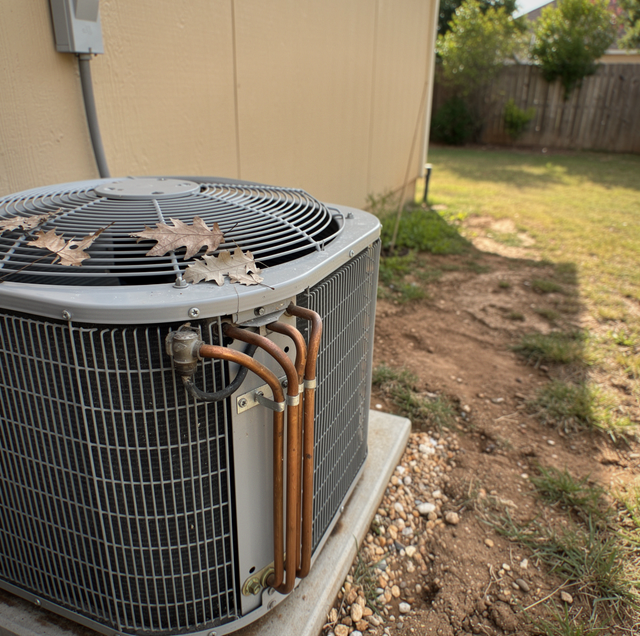
Is it worth repairing your AC compressor, or should the whole system come out? That's the question that sends homeowners straight to a search bar the moment a technician mentions the word "compressor" during a service call. The compressor is the sealed pump at the heart of the outdoor unit. It compresses refrigerant gas and pushes it through the coils, allowing heat to move out of the living space and into the outside air. When it fails, the whole cooling cycle stops, no matter how clean the filter is or how new the thermostat looks. The mechanism behind the repair-or-replace call comes down to a handful of measurable factors: how the compressor failed, how old the system is, what refrigerant it runs on, how efficient it's rated, and whether a warranty is still active.
How a Compressor Actually Fails
Compressors don't usually die from one single event. They wear down through a combination of electrical stress, mechanical wear, and refrigerant problems that build up over years of cycling on and off.
Electrical failure: The compressor's motor windings can short to the housing (a grounded winding) or short to each other (a shorted winding), both of which trip the internal overload or an external breaker. A weak start winding can also leave the motor unable to overcome starting torque, so it hums for a second, trips, and tries again.
Mechanical wear: Inside a scroll or reciprocating compressor, moving parts such as scrolls, pistons, valves, and bearings wear down over decades of friction and heat. Once clearances open up, the compressor loses its ability to build pressure, and cooling capacity drops even if the unit still runs.
Refrigerant-related stress: A low refrigerant charge deprives the compressor of the cool suction gas that helps carry heat away from the motor windings, causing it to run hotter than it should. On the opposite end, liquid refrigerant flooding back into the compressor during a cold start can cause slugging, which physically damages internal components on contact.
A compressor that's struggling to start makes a distinct sound: a heavy hum, then a click as the internal overload trips and cuts power before the windings overheat, followed by a pause before it tries again. That cycle repeating every few minutes is one of the clearest signs a technician listens for during a diagnostic visit.
A long, intense cooling season accelerates this process more than mild weather does. When outdoor units run near-continuously for weeks at a stretch, compressors, capacitors, and fan motors take on more electrical and thermal stress than a system that only cycles occasionally, and any oversizing or short-cycling problem in the original installation shows up sooner rather than later.
Age and Warranty Status Drive the Decision
Your compressor's age relative to the rest of the system matters more than the failure itself. Most residential split systems are built to run for about 12 to 15 years with regular maintenance, though a unit that's undersized, oversized, or poorly maintained can fall short of that, and one that's well cared for can exceed it.
Manufacturers typically back the compressor with its own limited parts warranty, separate from the rest of the equipment, which is one reason a technician will ask for the model and serial number before quoting a repair. If that coverage is still active, a compressor swap can be inexpensive relative to a full replacement. If it's expired, the homeowner is paying full freight for a part that's already nearing the end of its expected service life, which skews the math toward replacing the whole outdoor unit rather than investing in a single component.
Refrigerant Type Changes the Math
The refrigerant a system was designed around has a direct effect on whether a compressor swap makes sense. Older systems built around R-22 refrigerant are working with a refrigerant that's no longer produced for new use in the United States, so any supply now comes from reclaimed or recycled stock, which is limited and getting harder to source. Replacing a failed compressor on an R-22 system still requires refilling the line set with the same refrigerant, and availability alone can make replacing the whole system the more practical route.
Newer systems run on R-410A, which is itself being phased down under federal refrigerant-management rules in favor of lower-impact refrigerants such as R-454B, now appearing in newer Trane, Carrier, Lennox, Goodman, Rheem, York, Daikin, and Mitsubishi Electric equipment. A system already running on a refrigerant that's being phased down carries some of the same long-term supply risk that pushed R-22 systems toward full replacement.
SEER2 Ratings and Matched System Components Matter
SEER2 is the efficiency rating standard currently used to test and label cooling equipment. Swapping a failed compressor for a new one doesn't change the system's SEER2 rating; the compressor is only one part of a rated assembly. If the existing system was installed years ago and sits well below current efficiency standards, repairing the compressor locks the household into that older efficiency level for as long as the rest of the equipment lasts.
Matched systems, meaning a condenser, evaporator coil, and air handler or furnace blower engineered and tested together by the same manufacturer, are built to hit their rated SEER2 number as a set. Replacing only the compressor keeps the rest of that older envelope in place. Replacing the full outdoor unit, or the full system, is the only way to actually move the household onto a current efficiency rating.
Repeat Failures Signal a Deeper Problem
A single compressor failure, on its own, doesn't necessarily point toward replacement. A second major failure within a few years usually does. Recurring compressor problems, or repeated capacitor and contactor replacements on the same unit, often trace back to a root cause that a compressor swap alone won't fix: undersized electrical wiring, a unit that's oversized for the space and short-cycling because of it, a restricted refrigerant line, or a failing metering device that's starving or flooding the compressor over and over.
Airborne dust and pollen coating the evaporator and condenser coil fins over time can also restrict airflow and heat transfer, forcing the compressor to work harder to hit the same cooling output, and separately, mineral-heavy condensate can scale and clog the condensate drain line, backing water up into the drain pan even though the coil itself stays clean. A technician tracing a repeat failure will usually check coil condition, drain-line flow, refrigerant charge, and electrical supply together rather than assuming the compressor itself is simply defective a second time.
Repair-Favoring Factors vs. Replace-Favoring Factors
| Factor | Favors Repair | Favors Replacement |
|---|---|---|
| System age | Roughly 8 to 10 years old or less | Past 12 to 15 years, or the compressor has already been replaced once |
| Refrigerant type | Uses a refrigerant still in current production | Uses R-22 or a refrigerant already being phased down |
| Warranty status | Compressor still covered under an active parts warranty | Warranty expired or was never registered |
| Failure cause | Isolated part failure (capacitor, contactor, start relay) mimicking a compressor problem | Confirmed winding failure, locked rotor, or refrigerant-flooding damage |
| Efficiency rating | System already meets a reasonably current SEER2 | System sits well below current minimum efficiency standards |
| Repair history | First major compressor-related failure | Second or third major repair within a short span |
| Coil condition | Evaporator and condenser coils are clean, with no dust buildup or contamination | Coils are heavily fouled with dust/debris or contaminated from a prior burnout |
What a Technician Checks Before Recommending Either Path
Because a compressor sits inside a sealed, pressurized refrigerant circuit and runs on high-voltage electrical circuits, diagnosing it safely and accurately is licensed-technician-only work under EPA refrigerant-handling rules. A proper diagnostic typically includes measuring winding resistance to ground with a megohmmeter to check for a grounded or shorted winding, comparing amp draw against the compressor's rated load amps and locked rotor amps, testing the run capacitor's microfarad rating against the nameplate specification, and reading refrigerant pressures alongside superheat and subcooling values to see whether the charge itself is contributing to the problem. Those readings, taken together, are what separate a component that's actually failed from one that only looks like it has.
Frequently Asked Questions
On a routine swap, a technician can often finish in a single visit, but the job includes recovering the existing refrigerant with certified equipment, pulling a vacuum on the line set down below 500 microns to remove trapped moisture and air, and holding that vacuum for a set period before charging, so the visit typically runs several hours rather than minutes.
Yes. A weak or blown run capacitor can prevent a healthy compressor from starting at all, and one giveaway a technician looks for is a capacitor case that has visibly bulged or vented at the top, a sign it failed from age or heat rather than the compressor itself being at fault.
A hard-start kit adds a start capacitor and relay that deliver a brief extra jolt of torque during startup, which can help an aging compressor with a weakening start winding push through its first second of operation. It doesn't reverse motor wear, though, and is generally treated as a short-term bridge rather than a permanent fix.
Often, yes. Many manufacturers back the compressor with a longer limited warranty than the rest of the unit, sometimes extending to 10 or 12 years on the compressor specifically, but that extended coverage is void if the homeowner does not complete the manufacturer's product registration within the required window after installation.
A licensed technician recovers it into a certified tank using EPA-approved recovery equipment rather than releasing it into the atmosphere. Depending on its condition, that refrigerant is either filtered and reused in the same system or sent off for reclamation, since venting refrigerant into the air is prohibited under federal rules and handling it requires certification.
If the original compressor failed from an electrical burnout, that event can leave acid residue and metal debris circulating in the old coil and line set. Installing a new compressor onto that same contaminated coil without a thorough flush or a suction-line filter-drier can pull that acid straight into the new unit and cause a second failure within months, which is why a coil replacement is sometimes recommended alongside the compressor even when the plan was to save just the outdoor unit.
A compressor rarely fails without warning signs building for weeks or months beforehand: warmer supply air, longer run times, a hum that lingers before shutdown. Catching those signs early and getting an honest diagnosis before you commit to either a repair or a full replacement is what keeps a manageable fix from turning into an emergency swap in the middle of a summer heat wave or a winter cold snap.
Schedule a free second opinion — Above & Beyond will diagnose whether your compressor is worth repairing or a full system replacement makes more sense. Above & Beyond Air Conditioning & Heating serves San Antonio and the surrounding Hill Country. TACLA00095687E. Call (210) 897-8658.
