
Burning or Musty Smell From Your Vents? What It Means
The air kicks on, and something rides in with it. Maybe it is a damp, sock-drawer mustiness that settles over the living room. Maybe it is a sharper, hot-plastic edge that makes you look up at the vent and wonder if something is wrong. Your nose is not imagining it, and it is worth paying attention to because the smell coming from your vents is one of the most reliable early warnings a cooling system gives.
Different smells point to different problems, and a couple of them are the kind you want to act on today. Here is how to read what your vents are telling you.
Your Nose Is Reading the Airflow
Every smell in your home that comes from the vents is really one picked up somewhere in the system and blown to every room at once. The air handler pulls household air across a cold coil, through a filter, past the blower, and back out the ducts. Anything growing on, dripping into, or overheating along that path gets carried on the airflow. So a smell "from the vents" is rarely the vent's fault. It is a clue about a spot upstream.
That is why the same nose test that seems vague is actually useful. Musty means moisture and biology. Burning means heat and electricity. Sorting which one you have narrows the cause fast.
Musty or Mildew: Moisture Living in the System
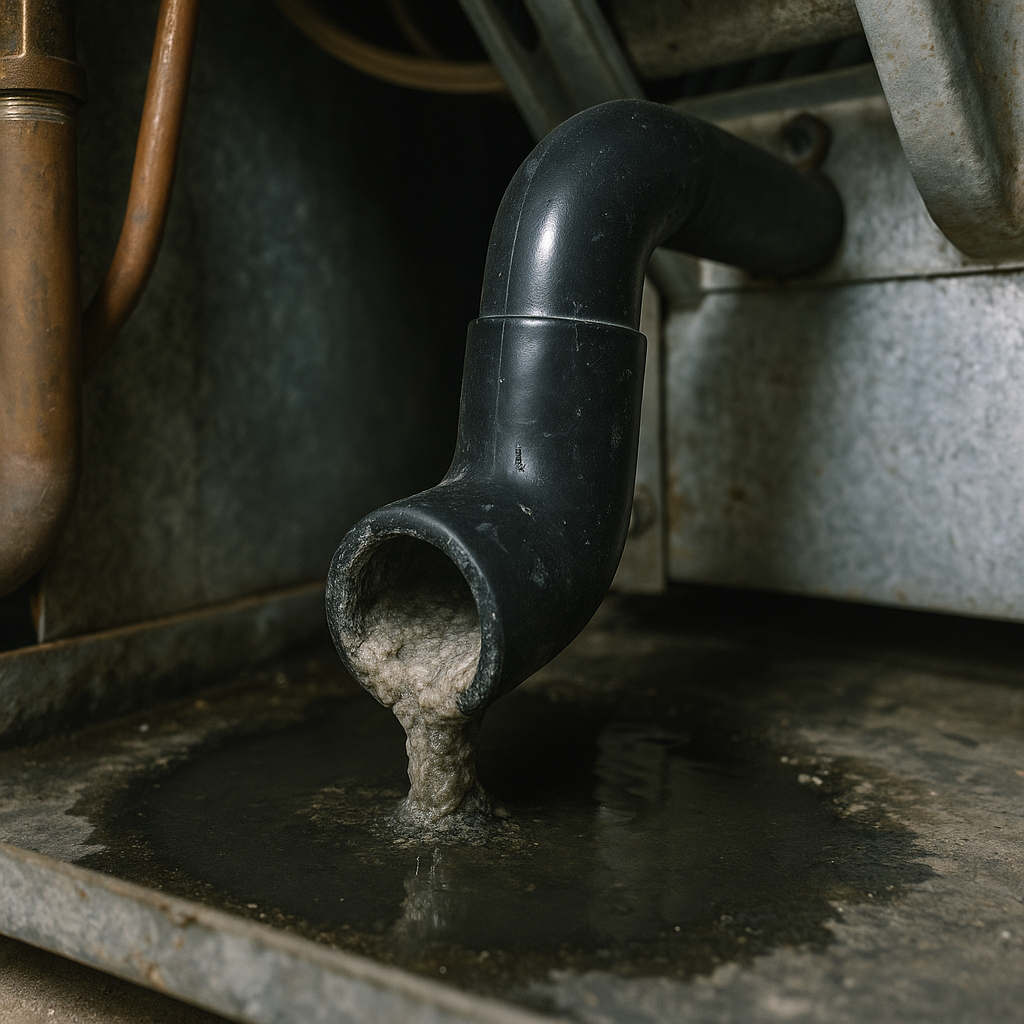
A damp, earthy, dirty-sock smell almost always traces to mold or mildew growing inside the system, and the mechanism is simple physics. The coil that cools your air runs cold enough to pull moisture out of the air, which is the whole point in a humid climate. That moisture is supposed to drip into a pan and run out through a condensate drain line. When the coil stays wet, and the drain slows or clogs, you get standing water sitting in a dark, cool box, which is exactly the environment mold likes. The blower then pushes air across that growth and out to every room.
In a place where the air conditioner runs for months without a real break, and the humidity is high, this is the most common smell of all. Two things usually feed it: a condensate drain line that has clogged with algae and mineral scale, and a coil or blower that has never been cleaned. Both get worse the longer the system runs wet.
| What you smell | Most likely source | How urgent |
|---|---|---|
| Musty, mildew, dirty socks | Mold/mildew on a wet coil or a clogged drain line | Soon, air quality and water damage |
| Hot dust, faint burning at startup | Dust burning off the heat strips or coil | Usually normal for the first run |
| Sharp, hot plastic or electrical | Overheating motor, capacitor, or wiring | Now, shut it off and call |
| Rotten eggs or sulfur | Possible natural gas near a gas furnace | Now, leave and call the gas utility |
| Chemical, sweet, like chloroform | Possible refrigerant leak | Prompt, needs a technician |
Burning Smells: Which Ones Are Normal and Which Aren't
Not every burning smell is an emergency, but one kind is, so this is the distinction that matters most. When a system runs cool for months and then the heat side fires for the first time, a faint hot-dust smell for a few minutes is normal. Dust settles on the heating elements over the cooling season and burns off harmlessly. It should fade quickly.
What is not normal is a sharp, acrid smell of hot plastic, melting rubber, or an electrical burn. That points at a component running too hot: a blower motor straining against a clogged filter, a failing capacitor, or wiring insulation starting to melt. Those smells mean heat where there should not be heat, and they can precede a burned-out motor or, in the worst case, an electrical fire.
If the smell is sharp, electrical, or like burning plastic, turn the system off at the thermostat and do not run it again until a technician has looked at it. If you smell rotten eggs or sulfur near a gas furnace, treat it as a possible gas leak: leave the house and call your gas utility from outside. These are not wait-and-see smells.
Why the Climate Makes This Worse
A cooling system that runs nearly year-round lives a harder life than one that gets a long off-season, and the smells reflect it. Months of continuous runtime keep the coil wet and give mold more time to establish. Heavy humidity means more condensate to drain, so a marginal drain line clogs sooner. And mineral-heavy condensate leaves scale that narrows the drain and builds on the coil. All of it points back to two habits that prevent most vent smells: changing the filter on schedule and having the coil and drain line cleared before the hardest stretch of the season.
What a Technician Actually Checks
When a smell brings someone out, the diagnosis follows the airflow. They inspect the coil and blower for mold and debris, check whether the condensate pan is holding water and the drain line is clear, inspect the filter, and test the electrical components for heat and wear. If it is a burning electrical smell, the motor, capacitor, and wiring are checked before the system is cleared to run. The fix ranges from a cleared drain and a fresh filter to a cleaned coil or a replaced part, but the point is to find the upstream source, not to mask the smell.
Frequently Asked Questions
That first blast pushes out the air that has been sitting in a damp system while it was idle, carrying whatever mold or mildew has been growing on the wet coil. As the system runs, the smell may fade because the airflow slightly dries the surfaces, but the source is still there. A musty startup smell is a sign that the coil or drain line needs cleaning.
It depends on the kind. A faint hot-dust smell for a few minutes when the heat runs for the first time is usually a harmless burn-off. A sharp, plastic, or electrical burning smell is not normal and means a component is overheating. Shut the system off and have it checked before running it again.
It is a specific musty odor caused by bacteria and mold building up on a damp coil, common in systems that cycle between cooling and heating. The biology sits on the coil, and the airflow spreads the smell. Cleaning the coil and keeping the drain clear is what clears it, not an air freshener.
Yes, and it is one of the most common causes. When the condensate drain clogs, water backs up and sits in the pan, growing algae and mold that the blower then blows through the vents. A clogged line can also overflow and cause water damage, so a musty smell paired with moisture near the air handler is worth quick attention.
Changing a dirty filter is always a good first step, and a clogged filter can cause a blower motor to overheat, which can lead to burning smells. It will not fix mold already growing on the coil or a clogged drain, though. Think of the filter as prevention and part of the fix, not the whole answer.
A sulfur or rotten-egg smell near a gas furnace can signal a natural gas leak, since gas is scented specifically so you notice it. This is the one smell to treat as an emergency: leave the house and call your gas utility from outside. If there is no gas appliance involved, the smell may be a plumbing or drainage issue rather than an HVAC issue.
Reading the Smell Before It Becomes a Repair
The air moving through your home is a running report on your system's health, and your nose reads it for free. Musty points at moisture and mold on a wet coil or a clogged drain, and it is worth clearing before it damages air quality or floods a pan. A sharp electrical or plastic burn point at a part running too hot, and that one gets the system shut off now. Learn the two categories, act on the urgent ones, and most vent smells stay small problems.
If your vents are pushing out a musty or burning smell, get the source found before it turns into a bigger repair. Above & Beyond Air Conditioning & Heating serves San Antonio and the surrounding Hill Country. TACLA00095687E. Call (210) 897-8658 for a free diagnostic visit.
