
Is It Bad If Your AC Runs All Day in Summer?
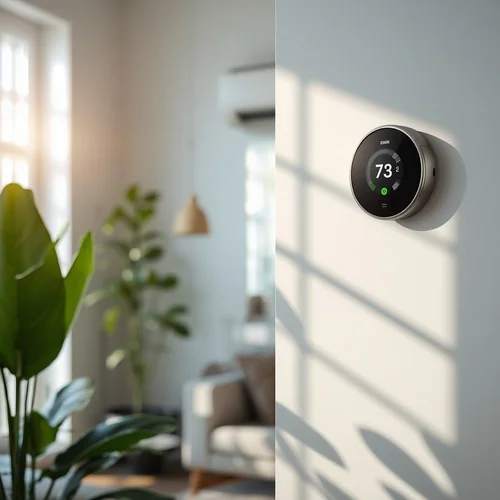
Quick Answer: It can be normal for an AC to run nearly constantly during the hottest part of summer — on an extremely hot day, the system may run almost continuously just to keep up, which isn't necessarily a problem. What is not normal is an AC that runs all day but can't actually reach or hold the set temperature, or that suddenly starts running far more than it used to. That points to a problem like a dirty filter or coils, low refrigerant, leaky ducts, poor insulation, an undersized or aging system, or a thermostat issue. So the real question isn't just whether it runs all day, but whether it's keeping your home comfortable while doing so.
During a brutal summer, it's common to notice the air conditioner seemingly never shuts off, which naturally raises the question: Is that bad? The answer is nuanced. Constant running can be perfectly normal in extreme heat, but it can also signal a problem — and the key is whether the system is actually keeping up. Here's how to tell the difference.
When Running All Day Is Normal
On an extremely hot day, an air conditioner running almost continuously can be completely normal. The system has to remove heat from your home faster than it's coming in, and when it's blazing outside, that's a tall order — so the AC runs and runs to maintain your set temperature against the relentless heat. As long as it's keeping the house at or near the temperature you've set and your home is comfortable, near-constant running during peak heat isn't necessarily a sign of trouble. It's the system working hard to do its job in tough conditions. Modern, efficient systems are also sometimes designed to run longer at lower output, which is normal.
When It's a Problem
The picture changes when the AC runs constantly, but it can't cool your home. If the system runs all day yet never reaches the set temperature, or can't hold it, that's a sign something is wrong — the AC is working but not succeeding. Likewise, a sudden change matters: if your AC starts running far more than it used to under similar conditions, that increase points to a developing problem rather than just hot weather. So the distinction is between an AC that runs a lot and keeps the house comfortable (likely fine) and one that runs a lot and falls short or has clearly changed (likely a problem).
| Situation | Normal or problem? |
|---|---|
| Runs constantly in extreme heat, keeps home comfortable | Likely normal |
| Runs all day but can't reach set temperature | Problem |
| Suddenly runs far more than before | Problem to investigate |
| Long, low-output runs on efficient system | Often normal |
| Runs nonstop and weak/warm air | Problem |
What Causes Problematic Constant Running
When constant running is a problem, several causes are common. A dirty air filter or dirty coils restrict airflow and heat exchange, making the system work harder for less cooling. Low refrigerant reduces cooling capacity, so the AC runs and runs without keeping up. Leaky or poorly insulated ducts lose cooled air before it reaches your rooms. Poor home insulation or air leaks let heat pour in, forcing the AC to run constantly to compensate. An undersized or aging system may not have the capacity to cool the home in extreme heat. And a thermostat problem can keep the system running when it shouldn't. Many of these make the AC run nonstop precisely because it can't achieve the comfort it's reaching for.
Why It's Worth Checking
The reason a problematic all-day run shouldn't be ignored is that it usually means both higher energy bills and a system under extra strain. An AC running constantly because it can't keep up uses far more energy than one cycling normally, and the continuous operation accelerates wear, potentially shortening the life of components like the compressor. Plus, you're not getting the comfort you're paying for. Catching the cause early, whether it's a simple dirty filter or something like low refrigerant or duct leaks, restores efficient cooling and eases the load on the system. So, while constant running in extreme heat can be fine, it's worth investigating if the home isn't staying comfortable or if the running has clearly increased.
The real test isn't the run time — it's whether your home reaches and holds the temperature you set. If the AC runs all day and keeps you comfortable in a heat wave, it's probably just working hard. If it runs all day and the house still feels warm or never hits the setpoint, that's your sign to have it checked.
What to Check First
If your AC is running constantly and not keeping up, start with the simple things: check and replace a dirty air filter, which is a common and easy cause of reduced performance, and make sure vents aren't blocked. If a clean filter and clear airflow don't help and the system still can't cool the home, the cause may be dirty coils, low refrigerant, duct leaks, insulation issues, an aging or undersized system, or a thermostat problem — all of which a technician can diagnose. The goal is to determine whether your all-day running is the normal response to extreme heat or a fixable problem keeping your home from getting comfortable.
Frequently Asked Questions
Not necessarily. On an extremely hot day, an AC running almost constantly to maintain your set temperature can be normal — it's working hard against the heat. The concern is if it runs all day but can't reach or hold the set temperature, or if it suddenly runs much more than it used to. Then it points to a problem rather than just hot weather.
Judge it by whether your home stays comfortable. If the AC runs a lot but keeps the house at or near your set temperature, it's likely just working hard in the heat. If it runs all day yet can't reach the setpoint, the house still feels warm, or the running has clearly increased under similar conditions, that signals a problem worth investigating.
Common causes include a dirty filter or coils restricting airflow and heat exchange, low refrigerant levels reducing cooling capacity, leaky or poorly insulated ducts losing cooled air, poor home insulation letting in heat, an undersized or aging system, and thermostat problems. Many of these make the AC run nonstop because it can't achieve the cooling it's reaching for, so it never shuts off.
If the AC is running constantly because it can't keep up, yes, it uses far more energy than a system cycling normally, raising your bills. Constant running in extreme heat to maintain comfort also consumes energy, but a system that runs nonstop yet still falls short is both inefficient and a sign of a problem. Fixing the cause restores efficient cooling.
Continuous operation, especially when the system is struggling to keep up, accelerates wear and adds strain, which can shorten the life of components like the compressor over time. Normal hard running in extreme heat is expected, but an AC running nonstop because of an unresolved problem is under extra strain. Addressing the cause eases the load and protects the system.
Start with a dirty air filter — a common, easy cause of reduced performance — and make sure vents aren't blocked. If a clean filter and clear airflow don't help and the home still isn't cooling, the cause may be dirty coils, low refrigerant, duct leaks, insulation issues, an aging or undersized system, or a thermostat problem, which a technician can diagnose and fix.
It's About Comfort, Not Just Run Time
Whether all-day AC running is bad comes down to one question: Is your home staying comfortable? In extreme heat, near-constant running to hold your set temperature can be perfectly normal. But an AC that runs all day and still can't cool the house, or that suddenly runs much more often than before, signals a fixable problem — from a dirty filter to low refrigerant to duct leaks. Check the simple things first, and have persistent issues diagnosed.
AC running all day but not keeping up — Get it checked to find out if it's the heat or a fixable problem. Above & Beyond Air Conditioning & Heating serves San Antonio and the surrounding Hill Country. TACLA00095687E. Call (210) 761-7747.
